
How to Pack Food for Moving: A Practical San Diego Guide
Learning how to pack food for moving starts with one decision: which items belong in sealed moving boxes, which must stay cold with you, and which should be used, donated or discarded before moving day.
Food is different from ordinary household contents. Cans become heavy quickly, glass containers can break, open packages can spill, and refrigerated products require continuous temperature control. A careful plan protects the rest of the shipment and reduces unnecessary waste.

Food Needs Its Own Moving Plan
Begin several days before packing the kitchen. Work through the pantry, refrigerator and freezer and place every item into one of four groups: use before moving, donate, transport personally, or consider for the household shipment after confirming the mover’s policy.
Do not pack food simply because it fits in a box. Consider the replacement cost, weight, remaining shelf life, risk of breakage and the time until it can be unpacked. Moving a nearly empty bottle of oil or a few inexpensive cans can cost more in materials, space and handling than replacing them.

Reduce the Kitchen Inventory Before Moving Day
A short pantry plan prevents rushed decisions and keeps food from being packed accidentally with cookware or appliances.
Decide What Moves, What Stays With You and What Does Not Go
| Category | Typical Examples | Recommended Decision |
|---|---|---|
| Sealed shelf-stable food | Unopened pasta, rice, cereal, canned food and factory-sealed dry goods | Consider packing only after confirming the mover’s policy, the destination and the delivery timing. |
| Opened pantry items | Open flour, sugar, grains, spices, snacks and baking ingredients | Use, discard or transfer to rigid leak-resistant containers. Do not rely on folded paper bags. |
| Refrigerated or frozen food | Meat, seafood, dairy, eggs, leftovers and frozen meals | Keep under customer control in properly chilled coolers or make another safe plan. Do not place them in ordinary boxes. |
| Damaged or questionable food | Leaking, swollen, badly dented, broken, expired or pest-affected packages | Dispose of the item safely. Moving is not a reason to keep food that may be unsafe. |
| Eligible donations | Unopened, unexpired nonperishable food accepted by a current donation program | Verify the organization’s rules and drop-off hours before making the trip. |
Pack Cans and Dry Goods Without Creating Overweight Boxes
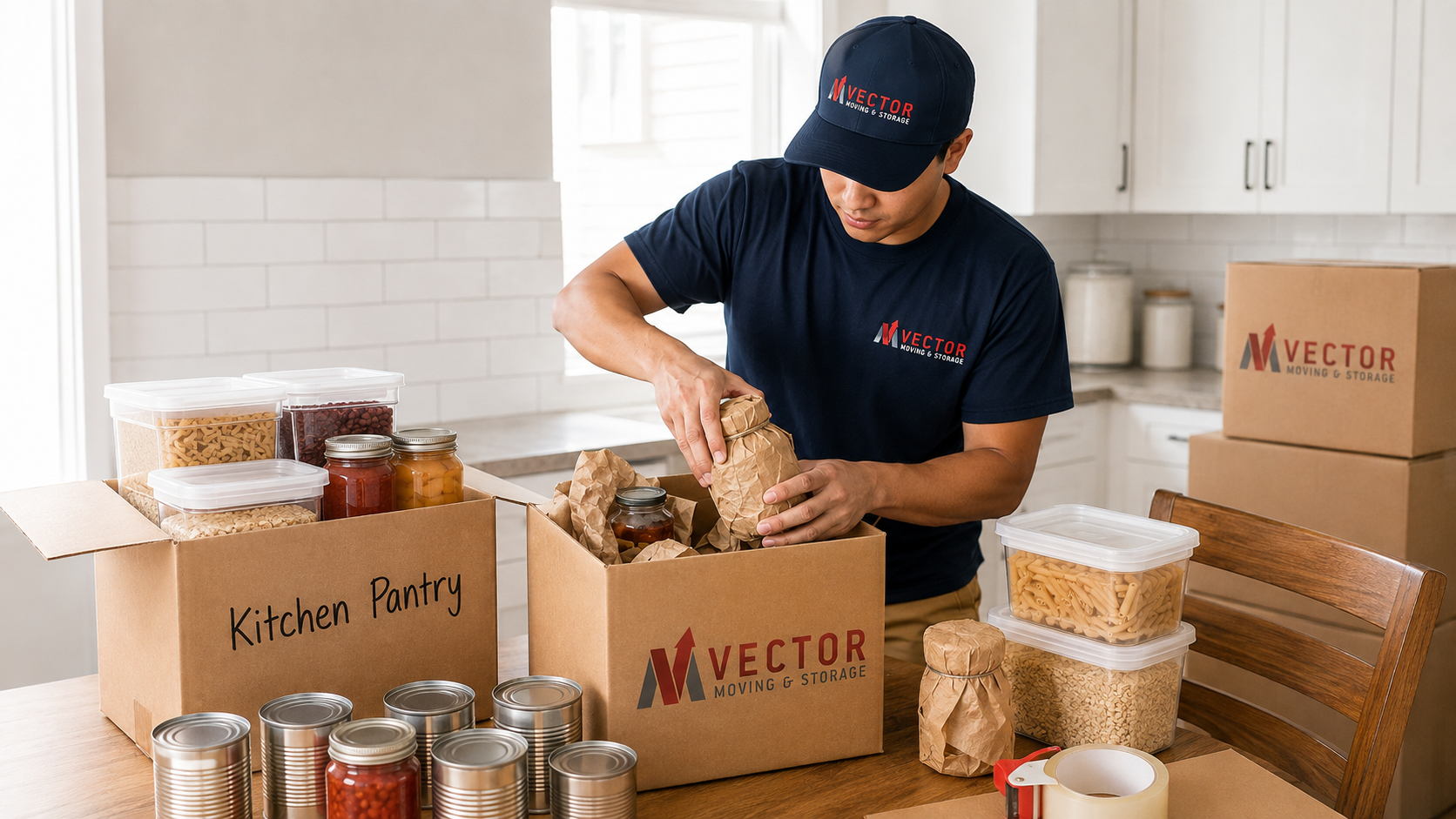
Canned food, jars, flour, sugar and beverages become heavy in very little space. Use small, sturdy cartons rather than filling a large box. Reinforce the bottom with packing tape, line it with clean packing paper and distribute dense containers across several boxes.
Place heavier items at the bottom and lighter packages above them. Keep every container upright. Fill empty spaces so contents cannot shift, but do not compress bags or cartons until they split. Seal the box fully and label more than one side.
Handle Open Dry Goods Conservatively
An open bag of flour or rice can spread through an entire shipment. Use it before moving when practical. Otherwise, place the product in a clean rigid container with a secure lid, then add a secondary sealed bag. If the packaging cannot be made reliably leak-resistant, do not place it with household belongings.

Prevent Breakage and Leaks From Reaching Other Belongings
Glass food containers and liquids can damage cartons, furniture and flooring when they break or leak. First decide whether each item is worth transporting and whether the mover accepts it. Discard leaking containers and do not pack anything with a loose, damaged or unreliable cap.
Inspect Every Lid and Cap
Wipe the container clean, tighten the original closure and reject anything cracked, sticky or already leaking.
Use a Sealed Secondary Bag
Place approved bottles or jars in individual leak-resistant bags before adding cushioning and boxing them upright.
Wrap Containers Separately
Use clean packing paper or suitable cushioning around each glass item. Avoid direct glass-to-glass contact.
Control Weight and Movement
Keep containers upright, cushion the bottom and top, fill voids and avoid making the carton too heavy to handle safely.
Do not pack food with cleaning products, pesticides, fuel, paint, aerosols or other household chemicals. Ask the moving office how to handle any item that is pressurized, flammable, corrosive or otherwise restricted.
Keep Refrigerated and Frozen Food Under Customer Control
Perishable food needs continuous temperature management. Pack it directly from the refrigerator or freezer into clean insulated coolers with sufficient ice or frozen gel packs. Use a refrigerator or cooler thermometer when possible, and transport the cooler in a vehicle where the responsible adult can monitor it.
USDA food-safety guidance says perishables should not remain above 40°F for more than two hours, or more than one hour when the temperature is above 90°F. When the temperature history is uncertain, do not taste the food to decide whether it is safe.
Move Food Directly Into the Cooler
Minimize the time between refrigeration and the chilled container. Keep the cooler closed whenever possible.
Prevent Cross-Contamination
Keep raw meat, poultry and seafood securely wrapped and separated from cooked or ready-to-eat food.
Fill Unused Cooler Space
A well-packed cooler with adequate ice or gel packs holds temperature better than a half-empty container.
Refrigerate Promptly
Confirm the new refrigerator is operating and evaluate each item using current official food-safety guidance.
Review the USDA’s current information about the food-safety danger zone. This article is general moving information and is not a substitute for advice from a qualified food-safety authority.

Empty and Prepare the Refrigerator Before the Movers Arrive
Remove all food, ice, trays, loose drawers, magnets and personal items according to the appliance manufacturer’s instructions. Disconnect water or power only as directed by the manufacturer or an appropriate service provider. Some refrigerators require special preparation, leveling or reconnection procedures.
If defrosting is required, allow enough time for the appliance to thaw completely. Collect water safely, clean the interior and dry every surface. Moisture trapped inside a closed refrigerator can create odor, mildew or leakage during transportation and storage.
Handle Food Differently for Local and Long-Distance Moves
Local Moving
A short trip reduces travel time but does not remove temperature or spill risks. Keep chilled food with the customer and move it directly between working refrigerators.
Local moving services →Long-Distance Moving
Delivery timing, overnight stops and temperature changes make most perishable food impractical. Reduce the inventory and keep travel food separate from the household shipment.
Long-distance moving →Interstate Restrictions
Plants, produce, meat and agricultural products may be subject to destination-specific rules. Check current official requirements for every state or border crossed.
First-Night Supplies
Keep water, simple meals, snacks, medication, pet food and basic utensils accessible rather than burying them inside the shipment.
Confirm the written delivery arrangement instead of assuming the household shipment will arrive when the family does. When replacement is easy, buying food after arrival is usually simpler than transporting it for several days.
Keep Food Boxes Separate From Active Loading
Finish pantry decisions before the movers begin carrying furniture. Clearly identify customer-carried coolers, travel food, medication and anything that must not enter the truck. Place those items in a closed room, locked vehicle or another controlled area away from the loading route.
Show the crew any approved pantry cartons and disclose glass, liquids or unusually heavy boxes. A box marked only “kitchen” does not tell the crew that it contains dense cans or breakable jars.

Donate Eligible Unopened Nonperishable Food Before Moving
Food donation can reduce box weight and help the community, but every organization sets its own acceptance rules. Check the condition, seal and date on each item, then confirm the current location, hours and requested products before visiting.
The Jacobs & Cushman San Diego Food Bank publishes current information for nonperishable food donations at its Miramar and North County facilities and at participating public drop-off locations. Donation rules and hours can change, so verify the details directly rather than relying on an old list.

Do Not Place Food Into Moving Storage
Food can attract pests, leak, create odors or spoil while belongings are stored. This includes open pantry items, canned food, beverages, pet food and anything requiring refrigeration. Storage facilities establish their own prohibited-item rules, and customers should confirm them before packing.
When a move includes temporary housing or delayed delivery, keep food with the family and purchase what is needed during the interim period. Do not hide food inside kitchen cartons or furniture. Clearly separating storage contents also protects nearby belongings.
Prepare a First-Night Kitchen Kit
Keep a small supply of food and kitchen necessities outside the main shipment. Match it to the family’s travel time, dietary requirements and access to stores or restaurants near the new home.
Choose Simple, Stable Options
Pack drinking water, shelf-stable snacks and an easy first meal that does not depend on unpacking the entire kitchen.
Keep Only What You Need
Consider a bottle opener, paper towels, cleaning cloth, trash bags, a few utensils and any required feeding supplies.
Maintain Temperature Control
Move approved cold food in the customer’s cooler and confirm the destination refrigerator is ready before transferring it.
Keep Critical Supplies Accessible
Separate infant feeding items, medically required food, allergy-safe products and pet food under responsible adult control.
Complete This Food-Packing Checklist
Use this final checklist when deciding how to pack food for moving without mixing perishables, leaking containers or customer essentials into ordinary household cartons.
Connect Kitchen Packing to the Complete Move
Packing Services San Diego
Full, partial and selected-room packing planned around the actual household inventory.
Packing services →Room-by-Room Packing Guide
Instructions for organizing boxes, supplies, furniture and other areas of the home.
General packing guide →Local Moving San Diego
Residential moving coordinated around the inventory, access and moving-day schedule.
Local moving →Long-Distance Moving
Pickup, transportation, packing and delivery planning for qualifying routes.
Long-distance moving →Frequently Asked Questions About Packing Food for a Move
Can movers transport food?
How should I pack canned food?
Can I move opened flour, rice or cereal?
How should glass food jars be packed?
Should refrigerated food go on the moving truck?
How cold should food remain during transportation?
What if refrigerated food becomes warm?
Can food be placed in moving storage?
When should I stop buying groceries before moving?
How do I prepare the refrigerator for moving?
Where can I donate food in San Diego?
Is moving perishable food long distance worthwhile?
Request a San Diego Packing Quote
Tell Vector Moving and Storage about the home, kitchen inventory, desired packing scope, access, moving distance, storage and schedule. Our office can explain how to pack food for moving within the policies and timing of your specific service.






No comment