
How to Pack for a Long-Distance Move: A Room-by-Room Guide
Packing for a long-distance move requires more than placing household belongings into boxes. Cartons may be handled through loading, extended transportation, possible storage and final delivery, so the inventory, materials, labels and open-first plan should all reflect the full journey.
This guide explains how to organize self-packing, where partial or full packing can help, how to prepare different rooms and what should remain with you. It supports the complete relocation plan without repeating Vector’s broader long-distance moving checklist.

Why Packing for a Long-Distance Move Needs a More Durable System
A local move often travels from one property directly to another on the same day. A long-distance shipment may remain in transportation longer, share scheduled handling stages, enter temporary storage or arrive after the customer. That does not mean every item needs custom crating. It means ordinary cartons must be structurally sound, closed securely and labeled well enough to remain understandable throughout the move.
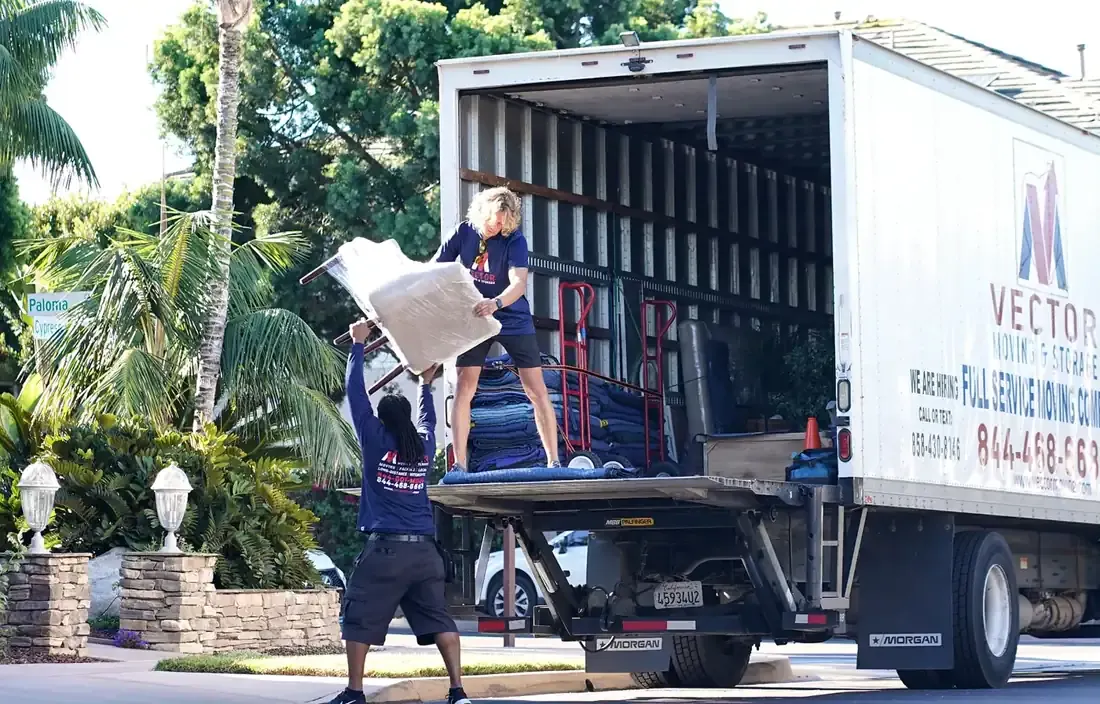
The plan should also distinguish small household contents from furniture. Customers may pack books, clothing and kitchenware while the moving crew prepares eligible furniture with blankets, wrap, mattress protection or standard disassembly according to the written service.
More Handling
Use intact cartons and enough cushioning to keep contents from shifting during loading, transportation and delivery.
More Detailed Labels
Include the destination room, general contents and priority—not only a word such as “miscellaneous.”
Separate Essentials
Anything needed before delivery should travel with the customer rather than inside the shipment.
Plan for Storage
If storage is possible, identify early-retrieval belongings and maintain a written carton inventory.
Decide What You Will Pack and What the Movers Will Pack
Packing does not have to be all or nothing. Choose a scope that matches your time, inventory, fragile belongings and comfort level, then put that scope into the estimate or service agreement. Avoid assuming that “moving service” automatically includes all cartons, unpacking or specialty preparation.
Self-Packing
You pack ordinary household contents before moving day. Confirm who prepares furniture, televisions, mirrors, artwork and unusual pieces.
Partial Packing
Professional help focuses on selected areas such as the kitchen, fragile décor, artwork, closets or the rooms still unfinished.
Full Packing
Eligible contents throughout the property are packed under an agreed scope, often before the physical moving day.
Furniture Preparation
Customer-packed cartons and mover-prepared furniture remain separate parts of the same loading plan.
Build the Household Inventory Before Buying Boxes
A bedroom count does not reveal the volume of books, kitchenware, garage contents, framed pieces, closets or storage areas. A reliable system for packing for a long-distance move begins with walking through the entire property and recording what is moving, what is staying and what is traveling with you.
Photograph unusually fragile or valuable pieces and provide measurements for large furniture, mirrors, televisions, stone, glass or custom items. Disclose existing damage and anything that may need additional labor, special materials or a specialty provider.
Create a Packing Timeline Based on the Work Remaining
A small organized apartment and a large home with a full kitchen, garage and collections do not require the same schedule. Start by estimating the actual number of rooms, cartons and difficult categories. Move from low-use belongings toward everyday essentials, and review progress early enough to arrange help if self-packing falls behind.
Partial packing can focus on the kitchen, fragile pieces, artwork or the rooms still incomplete. Tell the moving office before moving day so the crew, time and materials can be planned.
Choose Boxes by Weight, Shape and Fragility
There is no universal box size or weight that works for every household item. Dense belongings require smaller sturdy cartons. Light bulky items can use larger cartons. Fragile pieces need individual wrapping, cushioning and empty-space control. Every carton should close flat and remain reasonably manageable without unsafe lifting.
Small Sturdy Cartons
Books, records, canned food, tools and other dense contents. Avoid combining too many heavy categories in one box.
Medium Cartons
Many kitchen items, toys, folded clothing, linens, office supplies and mixed household contents.
Large Cartons
Light, bulky belongings such as pillows, comforters, lampshades and selected lightweight décor.
Dish or Fragile Cartons
Kitchenware and breakables that benefit from stronger construction, dividers or additional cushioning.
Wardrobe Boxes
Hanging garments that should remain on hangers. Remove jewelry, loose closet-floor items and immediate-use clothing.
Picture or Specialty Protection
Mirrors, framed pieces and unusual items should be reviewed by dimensions, condition and required protection.
Pack Each Room According to Its Contents
Use one room as the working zone when possible. Place empty cartons, paper, tape and labels there, then finish and label each box before starting another. Mixed boxes are harder to inventory and slower to place at delivery.
Kitchen and Dining
Pack rarely used serving pieces first. Wrap dishes individually, use dividers when suitable, keep heavy cookware low and remove open or perishable food.
Bedrooms and Closets
Separate immediate-use clothing, valuables and personal records. Use wardrobe cartons for suitable hanging garments and label linens by room.
Living Areas
Group books, décor, lamps, framed pieces and electronics separately. Photograph cable connections and measure large artwork or mirrors.
Home Office
Back up data, separate confidential records and label equipment, cables and cartons by destination workspace.
Bathrooms and Laundry
Discard unwanted products, close permitted liquids carefully and keep medication, toiletries and a first-night supply with you.
Garage and Outdoor Areas
Identify fuel, propane, chemicals, pesticides, batteries, tools and equipment that require specific instructions before packing.
Protect Breakable Kitchenware Without Overloading Cartons
Kitchens often contain the largest concentration of fragile and dense belongings. Use sturdy cartons, protect individual pieces and keep weight distributed. Plates are commonly packed on edge rather than laid flat, with appropriate cushioning below, between groups and above. Glassware should not bear the weight of cookware or pantry goods.
Remove food that cannot be transported safely, discard open or leaking containers and ask the mover about sealed pantry goods. Clean and dry small appliances before packing. Detachable parts should be secured and cables should be labeled.

Use Smaller Groups and Better Documentation for Dense or Sensitive Items
Books and Paper Files
Use smaller cartons and keep them structurally sound. Do not leave paper-heavy boxes so large that they become difficult to handle safely.
Computers and Electronics
Back up important data, photograph connections, label cables and remove media. Keep passwords and urgently needed devices with you.
Personal Records
Keep identification, financial records, medical information, school documents and irreplaceable papers in your custody.
Collections
Disclose value, fragility and existing condition. Ordinary cartons may not be suitable for every collectible or specialty object.
Original manufacturer packaging can be useful when it is complete and still structurally sound, but it should not be assumed to provide adequate protection after years of storage. Review high-value or unusual electronics with the mover before packing.
Identify Items That Need More Than an Ordinary Carton
Large mirrors, artwork, stone, glass, antiques, clocks, musical instruments, safes, wine collections and custom furniture can require additional review. Provide photographs, measurements, weight when known, existing condition and any manufacturer instructions. Some items may require custom crating, a third-party specialist or a different transportation arrangement.
Disclose It
Tell the mover about the piece before the estimate or packing date.
Measure It
Record dimensions and evaluate doors, stairs, elevators and destination access.
Document It
Photograph the complete item, details and visible pre-existing damage.
Confirm the Method
Ask whether ordinary protection, custom materials or a specialist is required.
Prepare Large Items Separately From Small Household Contents
Do not place furniture hardware, remote controls, keys or detachable shelves loosely in random cartons. Bag and label small parts, and identify the furniture they belong to. Photograph complex assemblies before disassembly and confirm which standard disassembly or reassembly is included.
Appliances may need cleaning, drying, disconnection, water drainage, transport bolts or third-party servicing according to the appliance and moving agreement. Use the manufacturer’s instructions and confirm who is responsible. Movers should not be expected to disconnect gas, alter plumbing or perform regulated trade work unless that service is specifically arranged through an appropriate provider.
Keep Essential, Valuable and Restricted Items Out of the Shipment
The lists below are general planning guidance, not a complete prohibited-items list. Requirements may vary by carrier, route, storage facility and current law. Ask for the mover’s current instructions and do not conceal contents inside sealed cartons.
Keep With You
- Cash, jewelry, identification and passports
- Keys, access cards and alarm devices
- Medication and immediate health supplies
- Financial, medical and legal records
- Irreplaceable photographs and personal documents
- Phones, chargers and urgent electronics
- Several days of clothing and toiletries
- Children’s and pet necessities
Discuss Before Packing
- Gasoline, propane and fuel-powered equipment
- Fireworks, explosives and ammunition
- Flammable, corrosive or leaking chemicals
- Pesticides, paint and selected household products
- Open liquids and perishable food
- Plants and items affected by state restrictions
- Temperature-sensitive or regulated goods
- Anything prohibited by the carrier or storage facility
For interstate moves, review the current FMCSA Moving Checklist and the consumer rights resources provided for household-goods shipments.
Owner-Packed Cartons and Professional Packing Are Not Identical
When the customer packs and seals a carton, the mover cannot see the contents, packing method or pre-move condition inside it. That does not automatically decide every later question, but it can make the facts more difficult to establish if concealed damage is discovered after delivery.
Use a detailed carton inventory for important contents, photograph valuable items before sealing and retain receipts or appraisals when relevant. Ask how high-value items must be declared and what documentation applies to the actual shipment. Review the written valuation or protection selection rather than treating general “insurance” language as a complete explanation.
Customer-Packed
Record contents, box number and pre-move condition for important items. Preserve the carton and packing materials if a problem is discovered.
Mover-Packed
Confirm the agreed rooms, eligible contents, material charges, labels and packing date in the written scope.
Specialty-Packed
Custom crates or third-party services should identify the responsible provider and how the item enters the moving shipment.
Protection Selected
Read the actual valuation and claims documents for the move. California and interstate rules should not be assumed identical.
Create Labels That Still Make Sense at Delivery
Place a box number and destination label on more than one side so the information remains visible when cartons are stacked. Avoid listing high-value contents in large public wording; keep detailed descriptions in your private inventory instead.
Pack an Essentials Group That Travels With You
Long-distance delivery may not occur the moment you reach the destination. Pack for the actual written delivery arrangement and keep essentials outside the household-goods shipment. The exact amount depends on the travel plan, family and destination readiness.
Documents and Access
Identification, contracts, keys, access codes, closing documents, contact information and copies of the moving paperwork.
Daily Living
Clothing, toiletries, medication, basic bedding and anything needed before ordinary boxes are available.
Technology
Phones, chargers, laptops needed for work, backup drives and security devices.
Family Needs
Children’s comfort items, pet supplies, snacks and other essentials appropriate to the trip.
Complete This Walkthrough Before the Moving Crew Arrives
If the scope changed, tell the mover before the crew arrives. More cartons, unfinished packing, added furniture, a storage stop or different access conditions can affect the service plan.
Connect the Packing Plan to the Complete Move
Professional Packing Services
Compare furniture preparation, partial packing, full packing and unpacking assistance.
View packing services →Long-Distance Moving
Review Vector’s qualifying long-distance transportation, packing and storage services.
View long-distance moving →Complete Moving Checklist
Plan estimates, credentials, access, inventory, delivery and moving documents from pickup to delivery.
Open the long-distance checklist →Moving and Storage
Coordinate packing labels, temporary warehouse handling, retrieval and final delivery.
Review moving and storage →Frequently Asked Questions
How early should I start packing for a long-distance move?
Should I use the same box size for every room?
How heavy should a moving box be?
Can I pack only some rooms and hire help for the rest?
Will movers pack furniture the same way as household contents?
What should I keep with me during a long-distance move?
Can I pack food, cleaning products or garage chemicals?
How should I label boxes that may go into storage?
Should I write valuable contents on the outside of a box?
What if I discover damage inside a box I packed?
Do I need professional crating for every fragile item?
Is this guide a replacement for my mover’s instructions?
Request a Long-Distance Packing and Moving Quote
Tell Vector Moving and Storage about the origin and destination, inventory, preferred packing level, fragile or specialty items, property access, storage requirements and timing. A complete scope helps match the crew, materials and transportation plan to the actual shipment.





No comment