
Moving Box Color-Coding System: How to Label Boxes and Furniture by Room
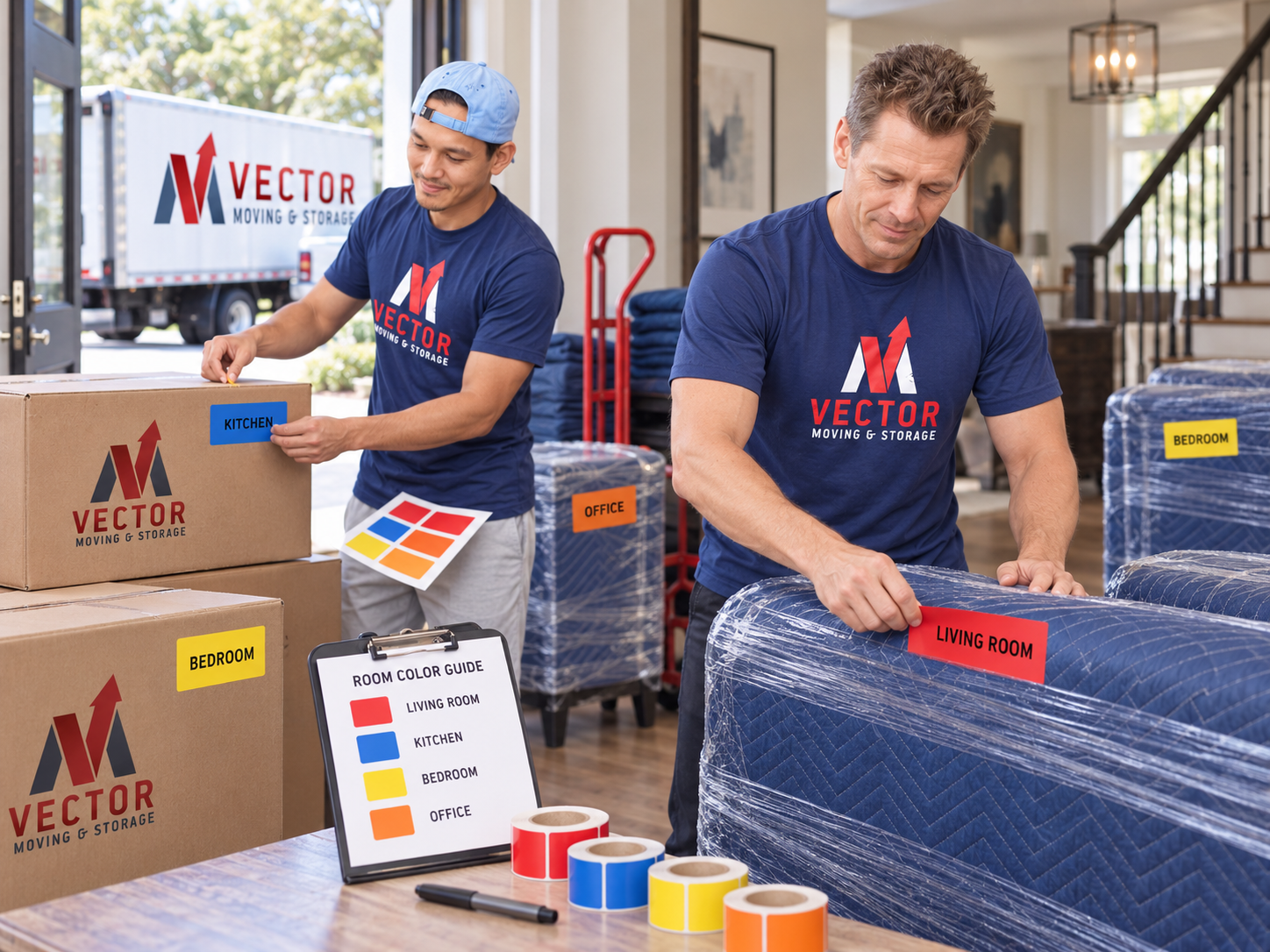
Color coding moving boxes can make a complicated move easier to direct, but the color itself is only one part of a reliable labeling system. Every carton and furniture tag should also show a readable destination room, contents or item name, and any relevant handling note.
A clear system helps customers and movers use the same destination plan. It is especially useful for homes with several bedrooms, multiple floors, storage deliveries or rooms that have similar names.

Color Labels Improve Routing—not Packing Protection
A room label answers one operational question: where should this item go? That answer can reduce repeated questions at the destination and help prevent boxes from collecting in the wrong bedroom. It can also make staged unloading easier when the customer has already decided how each room will be used.
A label does not protect fragile contents, strengthen a carton or make an item safe to carry. Glass, artwork, electronics, lamps and other delicate belongings still require suitable packing and separate handling information. Heavy boxes must still be packed within a manageable load and clearly identified.

Create a Master Destination-Room Map
Design the labeling system from the destination backward. Walk through the new home—or use a floor plan—and assign every room one permanent name. Avoid labels such as “Sarah’s room” unless every person working on the move knows Sarah and can locate the room immediately.
Use names tied to the property: Primary Bedroom, Bedroom 2, Upstairs Office, Family Room, Garage or Storage. When two rooms could be confused, add the floor or a number. The color is the quick visual cue; the written name confirms the destination.
Name Every Room
Use the exact destination name that will appear on boxes, furniture, door signs and the crew’s room chart.
Assign a Color
Choose colors that are easy to distinguish under normal indoor lighting and avoid nearly identical shades.
Add a Number
Use a room number or abbreviation so the system still works when a color is unclear or a label is damaged.
Post the Chart
Keep copies at the origin, destination and with the person directing placement on moving day.
Write the full room name or room number on every label. This helps people who cannot distinguish certain colors and keeps the system useful under low light, after labels fade, or when colors look similar.
This practical approach follows the same principle expressed in the W3C’s Use of Color guidance: important information should not depend on color alone.
Use a Simple Color, Name and Number Combination
The exact colors do not matter as much as consistency. A five-bedroom home may need more identifiers than a one-bedroom apartment, but every system should remain readable without a complicated legend.
| Visual Cue | Written Destination | Room Code | Example Item Label |
|---|---|---|---|
| Red | Living Room | LR-1 | LR-1 • Side table • 1 of 2 |
| Blue | Kitchen | K-1 | K-1 • Baking pans • Open week one |
| Yellow | Primary Bedroom | BR-1 | BR-1 • Nightstand • Left side |
| Orange | Upstairs Office | OF-2 | OF-2 • Monitor cables • Fragile |
| Purple | Garage Storage | GS-1 | GS-1 • Holiday décor • Storage |
If red and orange look too similar in the labels you purchased, change one before packing begins. Do not depend on remembering exceptions during moving day.
Give Each Label Enough Information to Make a Decision
A useful moving label can be read quickly without opening the box. Place the destination first, followed by a short contents description, unpacking priority and any honest handling note. Avoid writing a complete inventory paragraph in tiny lettering.
Room Name and Code
Example: “Bedroom 2 • BR-2.” This is the primary routing instruction for the crew.
Short Description
Example: “Desk supplies” or “Coffee maker and mugs,” not a vague description such as “miscellaneous.”
Open First or Storage
Mark the boxes needed during the first day or week and identify items that should remain in storage.
Fragile, Heavy or This Side Up
Use handling notes only when accurate. A “fragile” label does not replace suitable internal packing.
For complete household inventory control, assign box numbers such as K-01, K-02 and K-03. Keep a private list describing what is inside each number without advertising highly valuable contents on the outside.
Apply Labels Where They Stay Visible in a Stack
Place the room label on the top and at least two sides of each carton. A top-only label disappears as soon as another box is stacked above it. Side labels allow the destination to remain visible on a hand truck, inside the truck and after delivery.
Write directly on cardboard or apply labels to a clean, dry area. If reusing plastic bins, remove or cover old destination labels so the container does not display contradictory instructions. Use a permanent marker that will not smear under ordinary handling.
Number Boxes Within Each Room
Room-based numbering creates a simple count. If the kitchen has 18 boxes, label them K-01 through K-18 and record the final total. Numbering can help customers notice a missing or misplaced carton, but it does not replace the mover’s official inventory or shipping documents when those are part of the service.
Keep Private Details Off the Outside
Use descriptions such as “personal documents” instead of listing account information or valuable collections. Keep medicines, identification, keys, financial documents and other essential personal items with you rather than placing them in the moving shipment.
Attach Room Tags Without Damaging Finished Surfaces
Furniture tags should identify the destination room and, when useful, the exact position or set. For example: “Dining Room • Chair 4 of 6” or “Primary Bedroom • Left nightstand.” This is more precise than a color dot by itself.
Do not place packing tape or an untested adhesive directly on wood finishes, leather, fabric, glass, painted surfaces or electronics. Adhesive can leave residue, pull a finish or react differently after heat and pressure. Ask the mover where to place a removable tag—often on approved protective wrap rather than the furniture itself.
Keep Labels Out of Handling Areas
Place tags where they can be seen without covering a handhold, hardware connection, warning label or fragile edge. A label should guide placement without interfering with safe lifting or protective padding.

Place Matching Signs at Every Destination Room
Before delivery begins, place a large matching sign at each room entrance. The sign should show the same color, full room name and code used on the moving labels. Position it where it is easy to see from the hallway without damaging the door or wall.
Give the person directing the move a printed or digital copy of the master chart. If a room changes purpose, update the sign and tell the crew directly; do not expect everyone to discover the change from one corrected box.
Distinguish Bedrooms, Floors and Similar Rooms
“Bedroom” is not enough when a home has four bedrooms. Use Primary Bedroom, Bedroom 2, Bedroom 3 and Guest Bedroom—or another permanent scheme—and add the floor. The destination door should repeat that exact wording.
Multiple Bedrooms
Pair each room with a unique code such as BR-1, BR-2 and BR-3. Avoid relying only on family members’ names.
Multiple Floors
Add a floor indicator: 1F-LR, 2F-BR2 or 3F-OF. This helps before the crew reaches the staircase.
Two Offices
Use “Downstairs Office” and “Upstairs Office” or OF-1 and OF-2 rather than giving both the same color and name.
Garage and Storage
Separate garage-use items from cartons intended to remain sealed in long-term or temporary storage.
Keep Destination Labels Separate From Safety Instructions
A color tells the crew where the item belongs. It does not say whether the carton contains glass, whether it is unusually heavy or whether a piece requires upright handling. Add clear handling notes in a consistent location and disclose specialty items before the quote.
Use suitable materials and packing techniques for the contents. Mark the carton honestly, keep dense boxes manageable and tell the mover about artwork, mirrors, electronics, stone, glass and other items that may need special preparation.
Do not label every box “fragile.” When the term is used selectively and accurately, it is easier to notice. Similarly, identify a heavy carton before someone attempts to lift it—not only on the bottom or beneath a taped seam.

Use the Labels Throughout the Entire Move
At the origin, room colors help confirm that a group of boxes came from the same area. During loading, the crew may organize the truck according to weight, stability, delivery sequence and professional judgment—not merely by color. Do not rearrange or enter the truck without authorization.
At delivery, the room signs and labels become most valuable. One person should remain available to resolve exceptions. Furniture placement decisions should be made before a large item enters a narrow room whenever possible.
Before the crew leaves, check rooms, closets, garage and storage areas for obvious misplacement. It is easier to correct a Bedroom 2 box in the office while the crew is still completing the walkthrough.
Add an Unpacking Priority Without Creating Too Many Colors
Do not assign a new color to every possible instruction. Keep color reserved for destination rooms, then use a bold written priority such as OPEN FIRST, WEEK ONE or STORAGE. This keeps the visual system understandable.
Arrival Essentials
Bedding, basic kitchen items and other household supplies needed soon after arrival. Keep personal essentials with you.
Near-Term Setup
Routine clothing, office supplies, cookware and household items that are useful after the first day.
Seasonal or Decorative
Books, décor, collections and seasonal goods that can remain sealed while essential rooms are established.
Do Not Deliver to Room
Items approved for temporary storage. Confirm the storage destination instead of relying on a room color.
Separate Delivery, Storage, Donation and Customer-Transport Items
A room color is not enough when one move has several destinations. Add a large written destination category: NEW HOME, VECTOR STORAGE, DONATION, CUSTOMER VEHICLE or DO NOT MOVE. Keep these groups physically separated whenever possible.
Only include storage items that the mover and facility have approved. Food, hazardous materials, leaking products, prohibited items and belongings needed during temporary housing require separate decisions. Create a storage inventory that identifies the box number and general contents.
When stored goods will be delivered later, keep the original room codes. The labels can then guide placement during the final delivery rather than requiring the entire system to be rebuilt.

Adapt the Labeling System to the Type of Move
Color coding moving boxes can help with a short apartment move, a multi-level house or a long-distance relocation, but the surrounding documentation changes. Longer moves benefit from consistent box numbers and an accurate inventory because goods may be handled over a longer period and delivered after travel.
Local Moving
Room signs and a single director can keep a same-day delivery organized.
Local moving services →Long-Distance Moving
Use consistent box numbers, destination codes and written inventory references.
Long-distance moving →Professional Packing
Agree on the room system before packers begin so labels remain consistent.
Packing services →Partial Storage
Use an immediate destination plus the future room code for stored boxes.
Moving and storage →Avoid These Color-Labeling Mistakes
Using Color Alone
A faded, missing or confusing color makes the label useless. Always add the written room name or code.
Labeling Only the Top
Stacking hides the information. Repeat the destination on at least two sides.
Changing the Legend Mid-Move
Silent exceptions create placement errors. Update the chart, signs and crew together.
Similar Bedroom Names
“Kids Room” may be unclear. Add a unique number, floor and permanent destination name.
Old Labels Still Visible
Remove or cover previous room, delivery and storage labels before reusing a container.
Adhesive on Furniture
Attach tags only to an approved protective layer or another location that will not damage the item.
Moving Label Checklist
Complete the system before the busiest part of moving day. Color coding moving boxes works only when the chart, labels, destination signs and people directing the move all follow the same plan.

Connect the Labels to the Complete Packing Plan
A color system helps route belongings, while the broader packing plan determines box selection, internal protection, restricted items and preparation timing. Review Vector’s complete packing guide and the moving-box quantity guide before buying supplies.
If Vector is providing full or partial packing, share the finished room map before work begins. The team can then review how eligible boxes and furniture will be identified while the customer confirms destination room names and placement priorities.
Frequently Asked Questions
Is color coding moving boxes worth the effort?
It can be very useful for moves with several rooms, floors or destinations. The system works best when each color is paired with a written room name and matching destination sign.
Should every room have a different color?
Yes, when practical, but avoid colors that are difficult to distinguish. If there are too many rooms, use color groups plus unique room numbers or abbreviations.
Where should I put labels on moving boxes?
Place the destination on the top and at least two sides so it remains visible when stacked or placed on a hand truck.
Should I write the contents on every box?
Add a short useful description without listing sensitive or high-value details. Keep a more detailed private inventory if needed.
Can I put colored tape directly on furniture?
Do not apply untested adhesive directly to wood, leather, fabric, paint, glass or electronics. Ask where a tag can be attached to approved protective wrap or another safe location.
How should I label multiple bedrooms?
Use a permanent room name, number and floor, such as BR-2 • Bedroom 2 • Upstairs. Place the same identifier at the destination door.
Does a fragile label protect an item?
No. Fragile contents still need suitable internal packing and disclosure. The label is only a handling notice.
How do I label boxes going into storage?
Mark the immediate destination as storage, add the future room code and number the carton. Confirm the contents are approved for the facility.
Should I label furniture or only boxes?
Label both when destination placement could be unclear. Furniture tags can also identify matching sets, such as chair 3 of 6 or left nightstand.
What if someone cannot distinguish my colors?
Because color should not carry the information alone, every label and room sign should also display readable text, a number or both.
Who should direct furniture placement?
Choose one person who knows the destination plan and can remain available to answer the crew’s questions and approve exceptions.
Can Vector help label professionally packed boxes?
Vector can review a consistent room-labeling plan for eligible packing services. The customer should provide the final destination-room names and placement instructions before packing begins.
Request a Moving and Packing Quote
Share the home size, access conditions, packing level, storage needs and destination-room plan before moving day.
Vector Moving and Storage • CAL-T 0191886 • USDOT 3068354 • MC 059021 • Confirm current service availability and the exact scope of packing, labeling and storage for your move.









No comment