
How to Move a Home Gym Safely: A Complete Equipment Guide
Learning how to move gym equipment begins before anyone lifts a treadmill, weight bench or dumbbell. A safe plan accounts for the exact machine, its documented weight and dimensions, the manufacturer’s instructions, the route through both properties and the people or equipment required to handle it.
Home gyms combine concentrated weight, irregular shapes, electronics, moving parts and expensive finishes. Disclosing the full inventory before the quote gives the moving company an opportunity to review access, labor, tools, protection and whether a fitness-equipment technician is also needed.

A Home Gym Is Not an Ordinary Room of Furniture
A sofa is bulky, but its weight is generally distributed across a large frame. Gym equipment can place hundreds of pounds into a compact footprint, include a heavy flywheel or motor, and have arms, rails, screens and cables that are vulnerable when carried through a doorway. Free weights may look simple, yet one rack can represent a large amount of dense cargo.
The room itself also creates challenges. Garage gyms may have sloped driveways, storage cabinets or vehicles near the route. Upstairs gyms add stair turns and landing clearances. Apartment buildings may require elevator reservations, certificates of insurance, loading-area approval or limited move windows.

Create a Detailed Home Gym Inventory
List every machine, rack, bench, mat, plate, bar and accessory. For powered or connected equipment, record the brand and model number. Locate the owner’s manual and photograph the machine from several angles before anything is unplugged or adjusted. Include existing scratches or wear so the condition is documented.
Use manufacturer specifications or a reliable product label for weight and dimensions. Do not estimate a machine as “about the size of a bike.” Two stationary bikes can require very different handling. Tell the estimator whether a treadmill folds, whether a rack is bolted to the floor or wall, and whether a cable machine has an integrated weight stack.
Map the Exit and Entry Routes at Both Properties
Measure the equipment and every part of the route from its current position to the truck. Repeat the process from the truck to its planned location at the destination. The narrowest doorway is only one factor; a machine may pass through the opening but fail to rotate around a hallway corner or stair landing.
| Area to Check | What to Record | Why It Matters |
|---|---|---|
| Equipment | Width, length, height, documented weight and removable projections | Determines whether preparation changes the size enough for the route. |
| Doorways and halls | Clear opening after accounting for handles, hinges, trim and turns | Prevents discovering an impassable corner after the machine is already lifted. |
| Stairs and landings | Width, ceiling height, railing clearance, turn direction and number of flights | Affects labor, balance, equipment and whether the item is eligible. |
| Elevators | Door opening, interior dimensions, capacity, reservation and loading route | Building rules or limited cab dimensions may change the moving plan. |
| Truck access | Parking, driveway grade, garage clearance and carrying distance | Changes the time, equipment and distance between the room and truck. |
| Destination room | Final location, floor surface, outlet location and required operating clearance | Allows placement decisions before a heavy machine enters the room. |
Decide What Should Be Disassembled—and by Whom
Never begin by removing random bolts. Some fasteners control structural alignment, cable tension or folding mechanisms. Follow the manual for the exact brand and model, and preserve every warning, required tool and reinstallation step. If the manual is missing, obtain it from the manufacturer before the move.
Standard moving service may include limited disassembly and reassembly of eligible household items, but complicated gym systems are different. Integrated electronics, internal wiring, hydraulic parts, calibrated components, wall anchors, multi-station cable systems and commercial machines may require the manufacturer or a qualified fitness-equipment technician.
Vector can review transportation and ordinary moving preparation for disclosed equipment. Diagnosis, electrical work, calibration, repair and specialized mechanical assembly should be handled by the manufacturer or a qualified technician when required.
How Different Home Gym Items Change the Moving Plan
How to move gym equipment safely depends on its construction, not simply the room where it is used. Separate the inventory into cardio machines, strength systems, free weights, room components and any equipment requiring a technician.
Treadmills and Ellipticals
Long frames, motors, decks, consoles and moving linkages require model-specific preparation and protection.
Exercise Bikes and Rowers
Touchscreens, power cords, pedals, seats and rails should be protected according to the manufacturer’s directions.
Racks and Cable Machines
Anchors, long uprights, crossmembers, pulleys and weight stacks may require substantial disassembly or a technician.
Weights, Bars and Kettlebells
Small cartons and controlled loads prevent boxes from becoming unsafe or failing under concentrated weight.
Benches, Mats and Mirrors
Adjustable parts, rubber flooring, glass and wall-mounted pieces each need a separate plan.
Studio and Fitness Equipment
Business moves may require serial inventories, vendor technicians, after-hours access and phased placement.
Prepare Treadmills Without Damaging the Deck or Console
Record the treadmill’s model, dimensions and documented weight. Remove the safety key and follow the manual’s shutdown instructions. Unplug the unit and secure the cord only after the machine is powered down. Never pull, lift or tilt a treadmill by its screen, console, handrails or plastic covers.
Some treadmills have a manufacturer-approved folding or locking position; others require partial disassembly. Do not assume a folding deck makes the machine light or balanced. The motor and frame can remain extremely heavy. If uprights or wiring must be disconnected, the exact manual or a qualified technician should guide the work.
Before the Crew Arrives
Clear clothing, bottles and accessories from the machine. Photograph the console and condition. Confirm whether the treadmill can remain assembled, how it will turn through the route and where it will be placed at the destination.

Prepare Exercise Bikes, Ellipticals and Rowing Machines
Connected Exercise Bikes
Power the bike down and follow the manufacturer’s moving instructions. A removable touchscreen may need separate padded packing. Lower or remove adjustable projections only when the manual directs it, and protect pedals, knobs and holders from impact.
Elliptical Machines
Pedals and arms can move unexpectedly and create pinch points. Use the manufacturer’s approved transport position or disassembly process. Do not secure moving components in a way that damages wiring, finishes or linkages.
Rowing Machines
Record the rail length and check whether the model has an approved storage or separation configuration. Protect the monitor, handle, footrests, seat and exposed rail. Keep small hardware associated with the correct machine.
Compact Cardio Equipment
Steppers and smaller bikes can still be dense and awkward. Remove loose accessories, disclose the weight, protect displays and keep hands away from hinges or folding mechanisms during preparation.
For example, Peloton publishes a model-specific guide for moving its Bike and Bike+, including touchscreen removal instructions. Procedures vary by model, so use the manufacturer’s current instructions for your exact equipment.
Handle Power Racks, Cable Machines and Adjustable Benches
Empty every rack before attempting to move it. Remove plates, bars, collars, pins and loose attachments and organize them separately. If a rack is anchored to a wall or floor, arrange qualified removal and later installation when appropriate. Movers should not discover anchors after the crew begins lifting.
Photograph each side of a rack or frame before disassembly. Label compatible uprights, crossmembers and hardware so similar-looking components are not mixed. Long metal pieces should be protected from scratching nearby furniture, walls and one another.
Cable and Weight-Stack Machines
Integrated stacks, pulleys, tensioned cables and complex frames can require precise procedures. Do not release tension, detach cables or dismantle a weight stack without the manufacturer’s instructions and suitable expertise. Depending on the model, access and scope, a manufacturer-approved technician may need to prepare and reinstall the unit.
Benches and Attachments
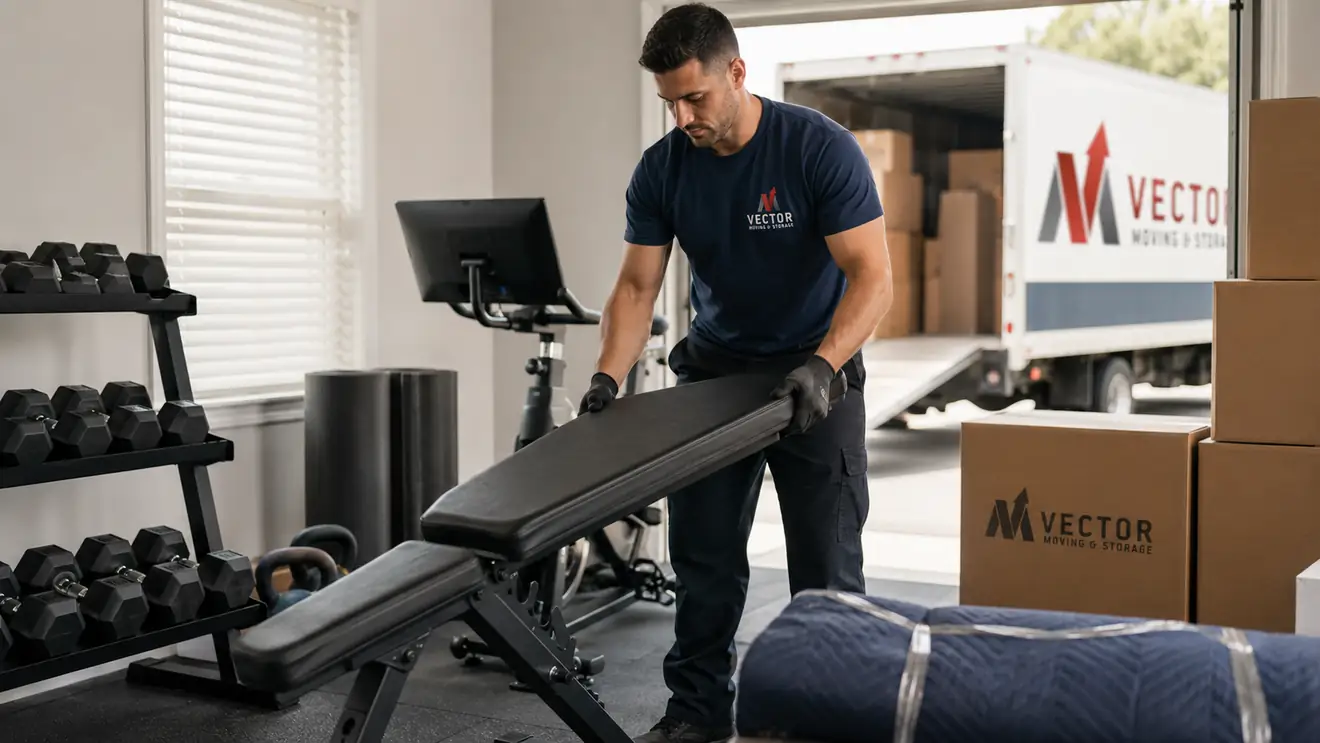
Remove loose pins, handles and detachable accessories. Lock adjustable sections only in an approved transport position. Keep the pad away from sharp metal edges and do not use the upholstery as a lifting point.
Pack Dumbbells, Weight Plates, Kettlebells and Bars Correctly
Free weights should not be placed loose in a moving truck or piled into ordinary large cartons. Concentrated weight can tear cardboard, shift suddenly and make a box unsafe to lift. Tell the moving company the total inventory, including the weight printed on each item whenever possible.
Control Each Load
Use small, strong containers approved for the move and keep each carton within a manageable planned weight.
Fill Voids Carefully
Use suitable packing material so metal pieces cannot roll, collide or break through the sides of the container.
Separate Metal Surfaces
Wrap or divide coated plates, adjustable dumbbell components and chrome bars to reduce contact damage.
Mark Heavy Contents
Identify the box as weights and disclose its actual load. A vague “gym” label is not enough for safe handling.
Long bars should be bundled and protected so their ends do not strike walls, glass or other belongings. Keep spring collars, clips, specialty handles and small attachments together in labeled containers.

Plan for Floors, Walls, Doorways, Stairs and Mirrors
Heavy equipment can concentrate pressure on hardwood, tile, carpet and stair edges. The mover should understand the flooring at both properties, the turns along the route and any recently finished surfaces. Clear the path completely before the crew arrives; gym mats, loose plates and cords can become trip hazards.
Rubber flooring should be cleaned, dried and handled according to its construction. Roll only products designed to be rolled. Interlocking tiles can be numbered or photographed before removal so the layout can be recreated.
Gym Mirrors and Wall-Mounted Equipment
Large mirrors, television screens, wall-mounted racks and anchored accessories require advance disclosure. Removal or installation may need a qualified specialist. Do not treat a fixed mirror as an ordinary loose household picture, and do not assume a mover can detach wall systems during the scheduled move.
Do Not Experiment With Extremely Heavy Equipment
A treadmill, integrated weight stack or fully loaded rack is not a safe do-it-yourself test lift. Do not drag equipment across floors, pull it down stairs, balance it on improvised wheels or ask unprepared helpers to “just grab one side.” Keep children and pets away from the active work area.
Professional planning may include suitable dollies, straps, floor protection, additional movers or a different approach, depending on the equipment and access. Some items may be ineligible because of weight, construction, condition or route. Others may require a specialty rigging or fitness-equipment provider.
Item shape, balance, grip, distance, posture, stairs and frequency all affect risk. OSHA’s material-handling guidance emphasizes planning and controlling heavy lifting rather than assuming a single weight is safe for every situation.
Review OSHA’s general information about heavy lifting and material handling. Customers should not enter the truck, operate ramps or liftgates, or reposition moving equipment without crew authorization.
Protect Equipment for the Truck Without Hiding Important Details
After approved preparation, loose components should be contained, labeled and assigned to the correct machine. Sensitive consoles and screens need suitable protection and should not carry weight. Finished metal parts can be separated to prevent rubbing, while moving blankets and other materials protect eligible exterior surfaces.
The crew needs to know which pieces are dense, fragile, top-heavy or mechanically sensitive. Labels should identify the machine, room and handling concern. Hardware should never be scattered across unmarked bags or taped where adhesive can damage upholstery, paint or electronics.

Local and Long-Distance Home Gym Moves
Local Moving
A shorter drive does not eliminate preparation. The equipment still must fit through both properties, remain controlled in the truck and arrive in the correct room.
Local moving services →Long-Distance Moving
Longer transportation makes stable packing, documented inventory and destination access especially important. Delivery timing and any storage period should be reviewed before service.
Long-distance moving →Interstate Moving
Verify the mover’s federal credentials and written estimate. Disclose every heavy or specialty item so it appears in the inventory and transportation plan.
FMCSA Protect Your Move →Destination Readiness
Confirm parking, elevators, stairs, operating clearance, floor protection and where each machine should be placed before delivery begins.

Confirm Gym Equipment Before Including It in Storage
If closing dates, renovation work or temporary housing create a gap, tell the moving office which fitness equipment may need storage. Eligibility can depend on size, weight, disassembly status, batteries, electronics, lubricants and the storage facility’s rules.
Remove personal items, water bottles, towels, supplements and food. Equipment should be clean and dry. Discuss how separated parts and hardware will remain associated with the correct machine and whether a technician must prepare or reinstall anything before and after storage.
Home Gyms and Commercial Fitness Facilities Need Different Plans
A residential gym may involve a few machines, weights and mats. A fitness studio, apartment gym, physical-therapy office or corporate wellness room can require a serial-number inventory, phased work, equipment vendors, elevator coordination, after-hours access and exact placement by floor plan.
Commercial equipment can be heavier and more complex than home models. Confirm which vendor is responsible for disconnecting, disassembling, calibrating and recommissioning each unit. Vector’s commercial moving team can review eligible transportation, packing, protection and placement as part of the larger relocation plan.
What Affects the Cost of Moving Gym Equipment?
There is no reliable price based only on the phrase “home gym.” A bench and two dumbbells are different from an upstairs room containing a treadmill, connected bike, rack, plates and cable system. A useful quote depends on the actual inventory and both addresses.
When asking how to move gym equipment within a complete household relocation, include it in the original estimate rather than presenting it to the crew after arrival. Advance disclosure makes the labor, truck space, protection and eligibility review more accurate.
Number, Size and Weight
Documented machine weight, separate plates and accessories affect labor, space and handling.
Disassembly Requirements
Simple approved preparation differs from technician-level cable, electrical or mechanical work.
Stairs, Elevators and Distance
Narrow turns, long carries, steep driveways and building reservations can change the plan.
Equipment and Property Surfaces
Flooring, doors, stairs, mirrors and sensitive finishes may require additional preparation.
Local, Interstate or Storage
Distance, delivery plan, additional stops and storage requirements affect the scope.
Outside Technicians or Riggers
Some equipment needs another qualified provider whose work is separate from moving labor.
Home Gym Moving Checklist
Use this checklist when planning how to move gym equipment without discovering critical measurements, missing manuals or technician requirements on moving day.
Connect the Home Gym to the Complete Move
Local Moving San Diego
Residential moving coordinated around the complete inventory, access and moving-day schedule.
Local moving →Long-Distance Moving
Pickup, packing, transportation and delivery planning for qualifying California and interstate routes.
Long-distance moving →Packing Services
Full, partial and selected-item packing for eligible household contents and moving preparation.
Packing services →Moving and Storage
Coordinated transportation and temporary storage when the new property is not ready.
Moving and storage →Frequently Asked Questions About Moving Gym Equipment
Can movers move a treadmill?
Do movers disassemble gym equipment?
Should I remove a Peloton screen before moving?
How should dumbbells and weight plates be packed?
Can a power rack be moved fully assembled?
Who should disconnect a cable machine?
How do I protect floors while moving heavy exercise equipment?
Can gym mirrors move with household belongings?
Can gym equipment go into moving storage?
What information should I provide for a gym-equipment quote?
Will movers test the equipment after reassembly?
Is moving gym equipment different for a long-distance move?
Request a San Diego Home Gym Moving Quote
Tell Vector Moving and Storage about every machine, weight and accessory, plus the stairs, elevators, parking, carrying route, required preparation, storage and destination placement. Our office can review the moving scope and identify questions that should be addressed before service.




No comment