
How to Move Into or Out of a Building With No Elevator
Moving into an apartment with no elevator requires more planning than simply counting the floors. Every box and furniture piece must pass through the full stair route, including doors, halls, landings, turns, railings, low ceilings, exterior conditions, and the distance from the closest lawful truck position.
The best plan begins before moving day: show both properties accurately, measure large items and the narrowest stair sections, finish the agreed packing, identify specialty pieces, confirm building rules, and let the moving company review the crew and equipment for the actual route.
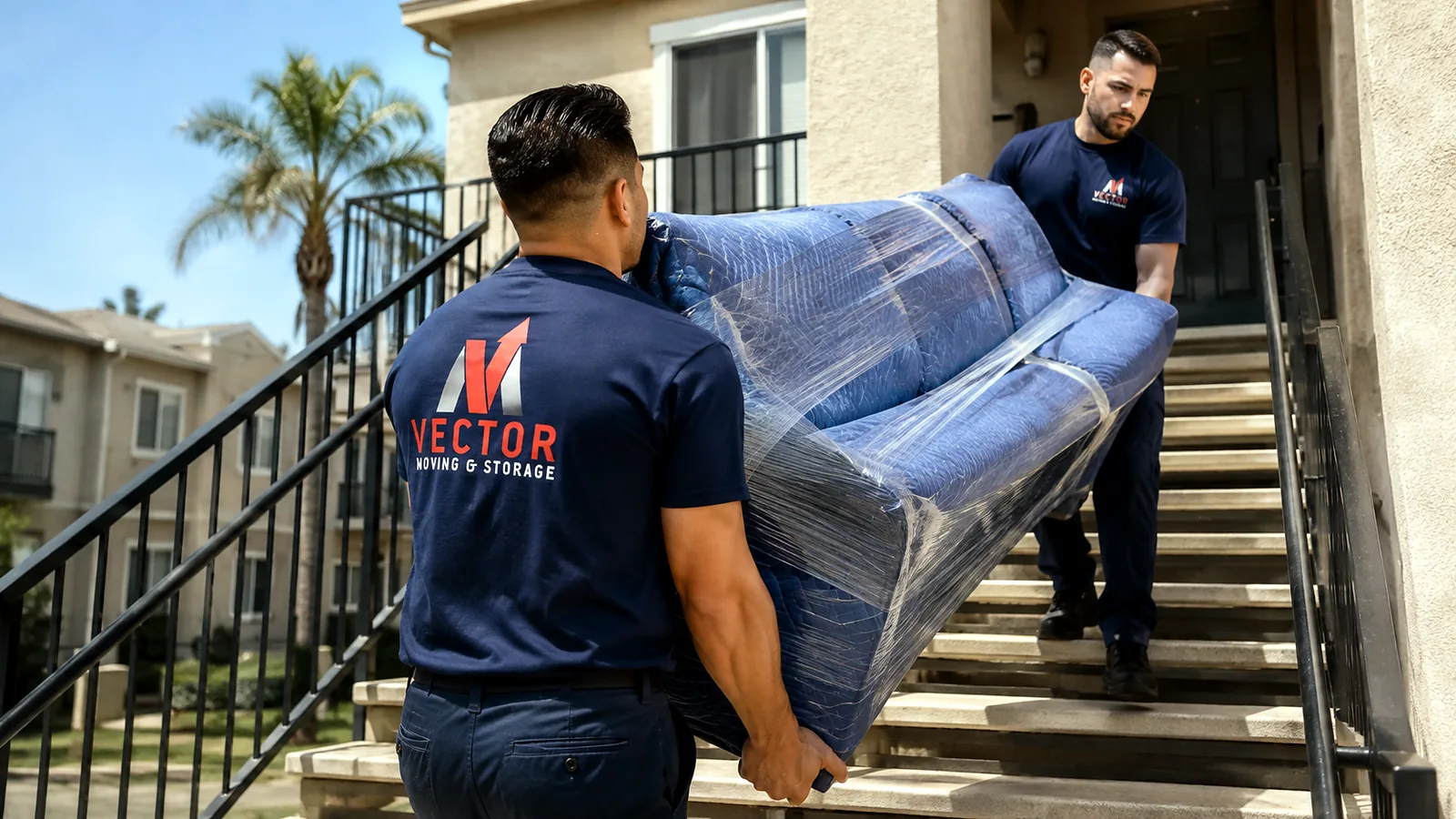
Planning a Move Into an Apartment With No Elevator
A second-floor unit with a wide straight stairway and nearby truck access may be easier than another second-floor unit with two tight turns, a long courtyard, narrow doors, and a sectional sofa.
Flights and Steps
Report the number of flights at both addresses, whether the stairs are interior or exterior, and whether the route changes between floors.
Landings and Turns
The narrowest width, landing depth, turn angle, railing position, and ceiling clearance can determine whether large furniture fits.
Truck-to-Stair Distance
A lawful curb or loading location may be far from the stairwell because of gates, courtyards, alleys, landscaping, or building rules.
Furniture Shape
Sectionals, mattresses, dressers, appliances, exercise equipment, glass, stone, and specialty items create different carrying and fit problems.
These Situations Require Different Decisions
The Building Has No Elevator
The move should be estimated and staffed as a stair move from the beginning. Provide the floor level, flights, photographs, dimensions, parking, and large-item inventory before booking.
An Expected Elevator Is Unavailable
Notify the moving company immediately. The options may include another approved elevator, a revised stair plan, a different crew or schedule, rescheduling, or removing an item that cannot use the stairs.
Do not wait for the crew to arrive before reporting a known elevator outage. A move booked around elevator access may use a different labor, equipment, timing, and furniture-fit plan than a walk-up move.
Walk-Up Apartment Stair Access Planner
Use this tool to identify the level of access review the move may need. It does not calculate a guaranteed crew size, price, completion time, or furniture fit.
Suggested Planning Level
Detailed access review recommendedSend photographs or a short video of both stair routes and the largest furniture before the office confirms the plan.
Show the Complete Route at Both Properties
A few clear photographs and measurements can prevent the crew from discovering a tight landing, exterior staircase, or distant truck position only after arrival.
| Information | What to Record | Why It Matters |
|---|---|---|
| Floor and flights | Pickup floor, delivery floor, flights, steps per flight, interior or exterior. | Helps review carrying time, crew rotation, and the overall workflow. |
| Stair width | Measure the narrowest clear width, including railings and projecting fixtures. | A wide room measurement does not show the actual furniture path. |
| Landings and turns | Landing width and depth, sharp turns, curves, half-flights, and door swing. | Large pieces may need room to rotate before entering the next flight. |
| Ceiling clearance | Low ceilings, sloped ceilings, fixtures, sprinklers, and the clearance at turns. | A sofa may fit the stair width but fail when tilted under a low ceiling. |
| Parking and carry | Closest lawful truck location, gates, alleys, courtyards, ramps, and distance. | Stairs plus a long carry create a different workload from direct access. |
| Largest items | Dimensions and photos of sofas, dressers, appliances, gym equipment, glass, stone, safes, and pianos. | Specialty items can change eligibility, equipment, staffing, and route options. |
Measure the Furniture and Every Restriction Along the Stair Route
Measure the sofa, sectional components, mattress, headboard, dresser, table, appliance, exercise equipment, and any unusually shaped item. Record width, depth, height, removable legs, loose parts, and whether the item is already damaged or unstable.
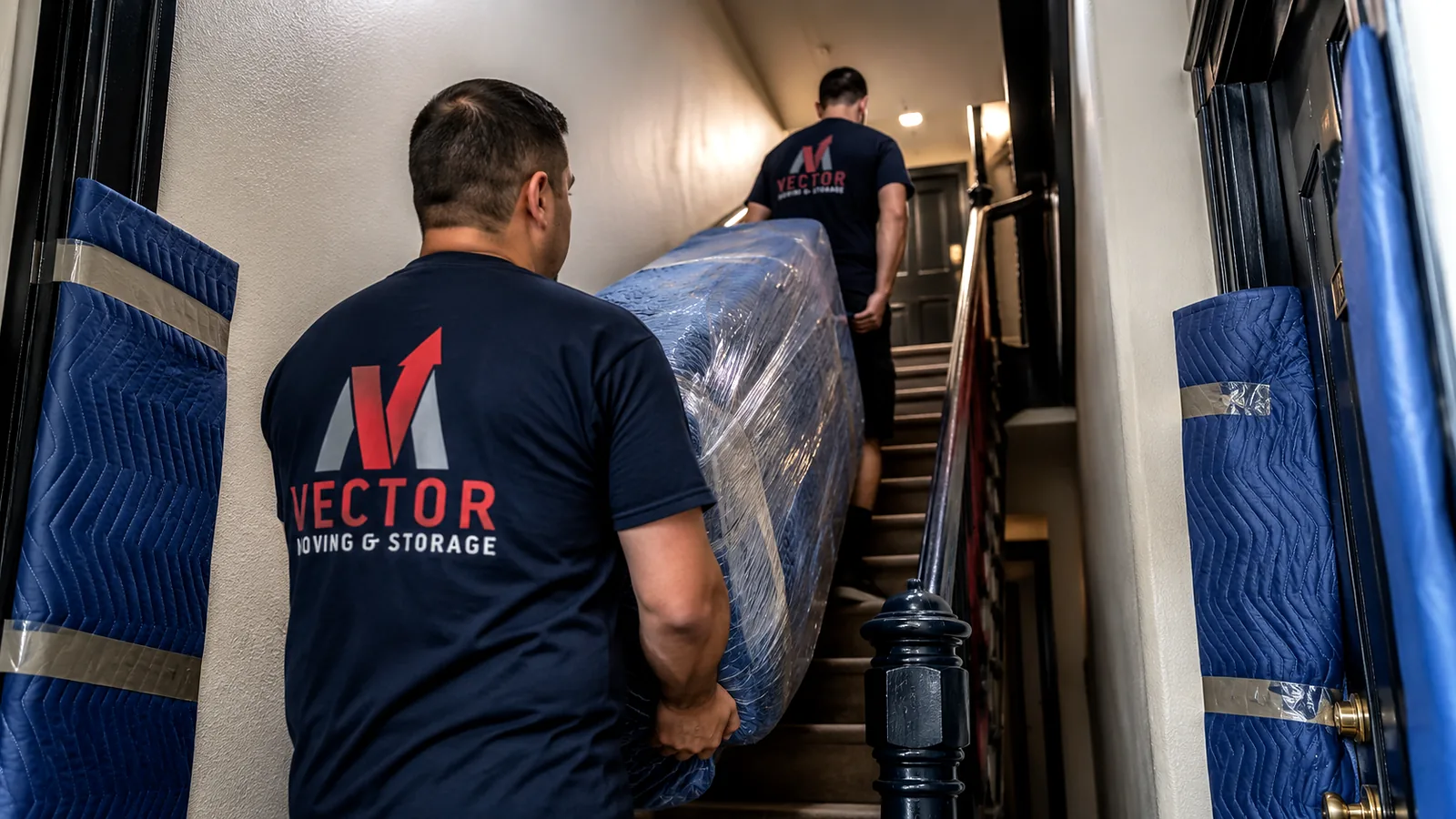
Some Pieces Become Smaller; Others Need Specialty Review
Eligible Standard Disassembly
Removable sofa legs, standard bed frames, table legs, and some modular shelving may be disassembled when suitable and included in the service.
Keep Parts Organized
Place hardware in sealed, labeled bags or a dedicated parts box. Do not apply adhesive directly to finished furniture surfaces.
Items Requiring Advance Review
Antiques, adjustable beds, built-ins, mechanical furniture, damaged pieces, stone, large glass, safes, pianos, and exercise machines need individual review.
When Furniture Does Not Fit
Possible options include approved additional disassembly, another entrance, removing the item from the shipment, a specialty provider, or rescheduling after a new plan is approved.
Use Closed Boxes That One Trained Mover Can Control
Stairs magnify problems created by weak cartons, loose contents, poor labels, and excessive weight. Boxes should remain stable when lifted, turned, briefly staged, and carried through the full route.
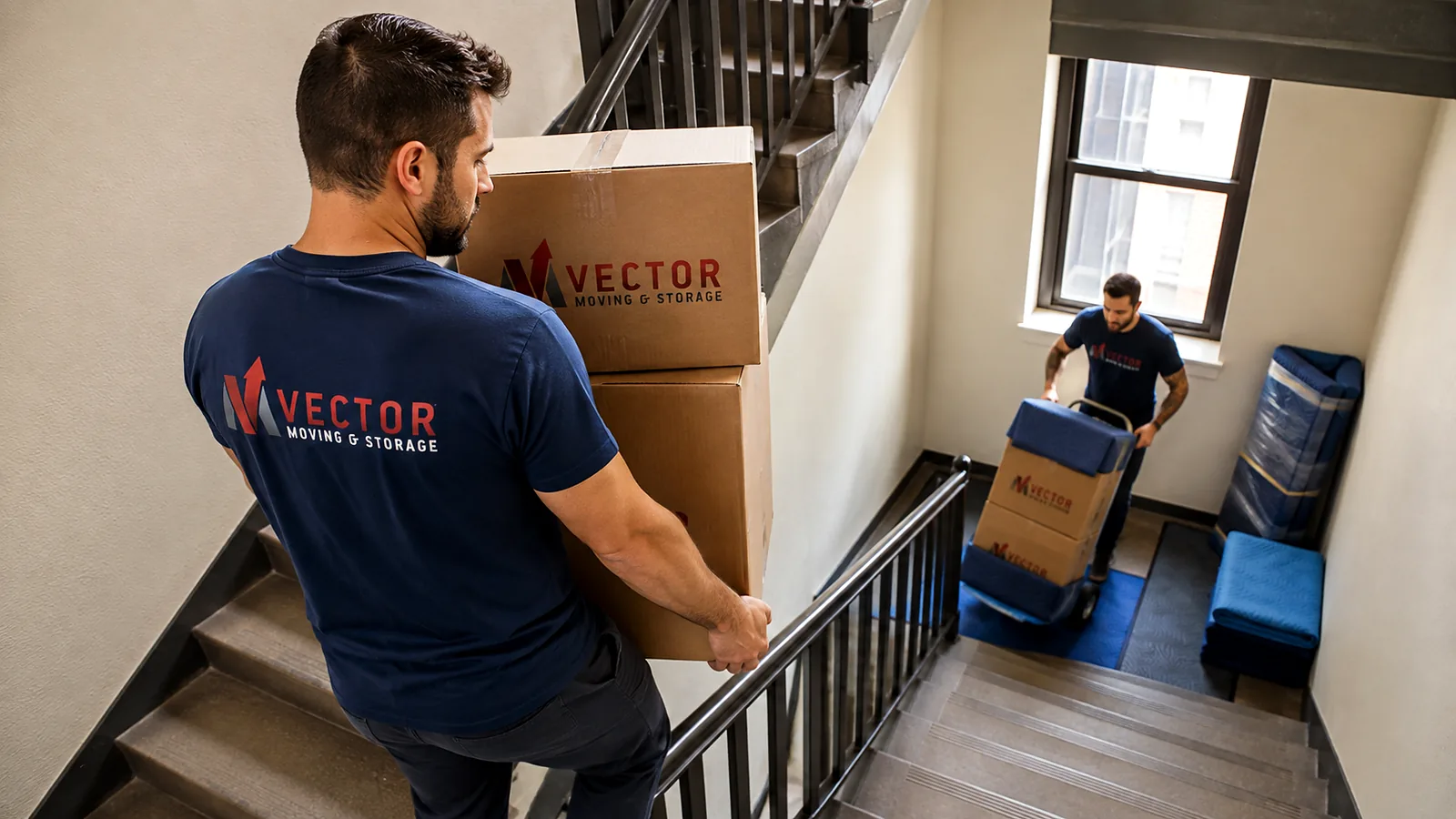
Find the Closest Lawful and Approved Truck Position
“Park as close as possible” is incomplete advice. The truck position must comply with posted restrictions, curb rules, street sweeping, gates, fire access, property-management instructions, and safe commercial-vehicle operation.
Public-Street Rules
Read signs and curb markings and check current City rules. An apparently open curb is not automatically a legal loading area.
Building-Controlled Areas
Confirm loading zones, alleys, courtyards, garage clearances, gate access, approved hours, and whether doors may be temporarily held open.
Long Carry Before the Stairs
Measure the distance from the truck to the first step and identify slopes, ramps, gates, landscaping, narrow sidewalks, and neighbor access.
The Stairwell Must Remain a Controlled Work Route
Property Protection
Depending on the route and written service, protection may be used on entry floors, doorways, corners, railings, landings, or other high-contact areas.
Remove Obstacles
Clear shoes, plants, mats, décor, loose boxes, bicycles, strollers, and anything that narrows the stairs or creates a trip hazard.
Coordinate Neighbors
Notify management when temporary traffic coordination is needed and avoid blocking other residents’ access longer than necessary.
Document Existing Conditions
Photograph walls, railings, landings, doors, and furniture condition before work begins, especially in managed buildings.
Ensure adequate lighting. Exterior stairs should be dry, visible, and free of debris. Rain, heat, wind, or slippery surfaces may require timing or safety changes.
Stairs Affect the Work Together With the Inventory and Carrying Distance
Repeated carrying on stairs can affect pace, crew rotation, furniture preparation, and the overall schedule. It should be reviewed as one part of the complete move—not as an isolated checkbox.
Smaller Fully Packed Move
A limited inventory, one standard flight, wide landings, and nearby lawful parking may need only a normal stair-move review.
Two Addresses With Stairs
Stairs at both pickup and delivery can increase the repeated workload and may change the recommended crew or schedule.
Unfinished Packing
Open cartons and last-minute packing delay loading and create a separate workload before the crew begins repeated stair carrying.
Large or Specialty Inventory
Sectionals, heavy dressers, appliances, exercise equipment, glass, stone, safes, or pianos require individual planning.
From Truck Access to the Final Stairwell Walkthrough
Stay Available Without Entering the Active Carrying Route
OSHA and NIOSH describe repetitive lifting and manual material handling as ergonomic risk factors. The crew should select methods and equipment for the actual task rather than asking the customer to improvise on stairs.
Connect the Stair Plan to the Rest of the Move
Local Moving Services
Plan apartment, condominium, townhome, house, furniture-only, and approved multi-stop moves.
Local moving services →Parking and Access Guide
Review lawful truck placement, elevators, gates, long carries, driveways, and building requirements.
San Diego parking and access guide →Crew Recommendation
See how stairs, packing, inventory, parking, storage, and specialty items can affect the crew plan.
How many movers may you need? →Packing Guide
Prepare closed, labeled cartons and separate valuables, medication, documents, and first-night essentials.
How to pack for a move →Moving-Day Process
Follow the process from crew arrival and walkthrough to protection, loading, delivery, and sign-off.
What to expect from movers →Damage Documentation
Learn what to photograph, preserve, report, and include in a written moving damage claim.
Moving damage claims guide →Frequently Asked Questions
What should I provide when moving into an apartment with no elevator?
Does a no-elevator move usually take longer?
Do stairs affect the moving quote?
How many movers are needed for a walk-up apartment?
What stair measurements should I send?
Should I disassemble my sofa before the move?
How heavy should boxes be for a stair move?
Can movers carry appliances upstairs?
Can movers take a piano or safe up stairs?
What happens when furniture does not fit?
Should I reserve the stairwell with management?
What should I do if the elevator unexpectedly stops working?
Can I help the movers carry boxes?
How should the stairwell be protected?
What should happen during the final walkthrough?
Request a Walk-Up Apartment Moving Quote
When moving into an apartment with no elevator, share the pickup and delivery floors, flight counts, stair photos or video, parking distance, building rules, furniture dimensions, box count, packing status, specialty items, and moving date. Complete information helps Vector Moving and Storage review the crew, equipment, and service plan before the truck arrives.




No comment