
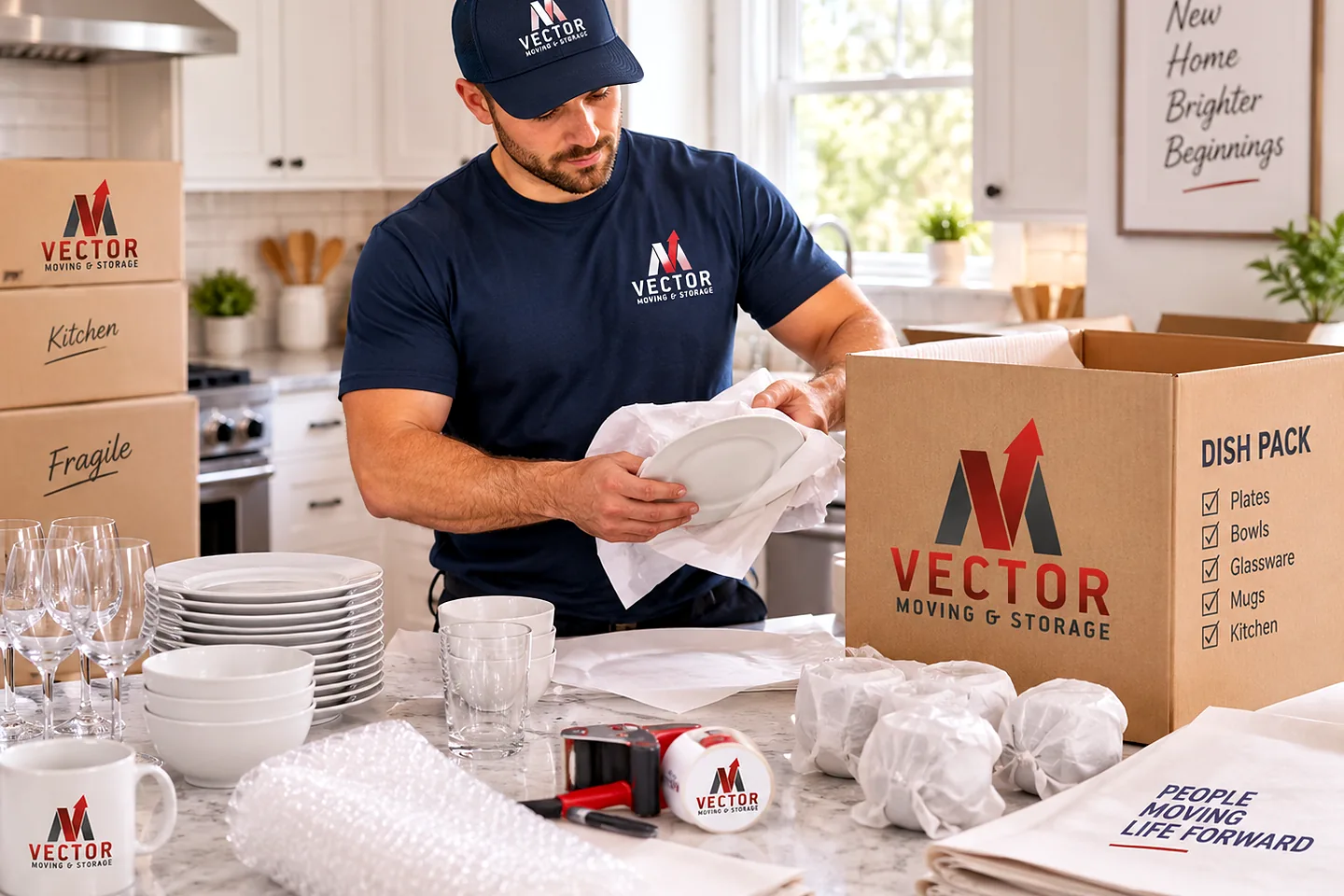
How to Pack a Kitchen for Moving
Learning how to pack a kitchen for moving means treating plates, stemware, cast iron, knives, appliances, pantry goods, liquids, and refrigerated food as different categories. The kitchen often contains more fragile, dense, sharp, spillable, and electrically powered items than any other room.
This guide explains the packing order, dish-pack setup, box sizes, plate and glass techniques, knife safety, small-appliance preparation, pantry decisions, food-safety limits, labels, an open-first kitchen box, and the differences among local, long-distance, and storage packing.
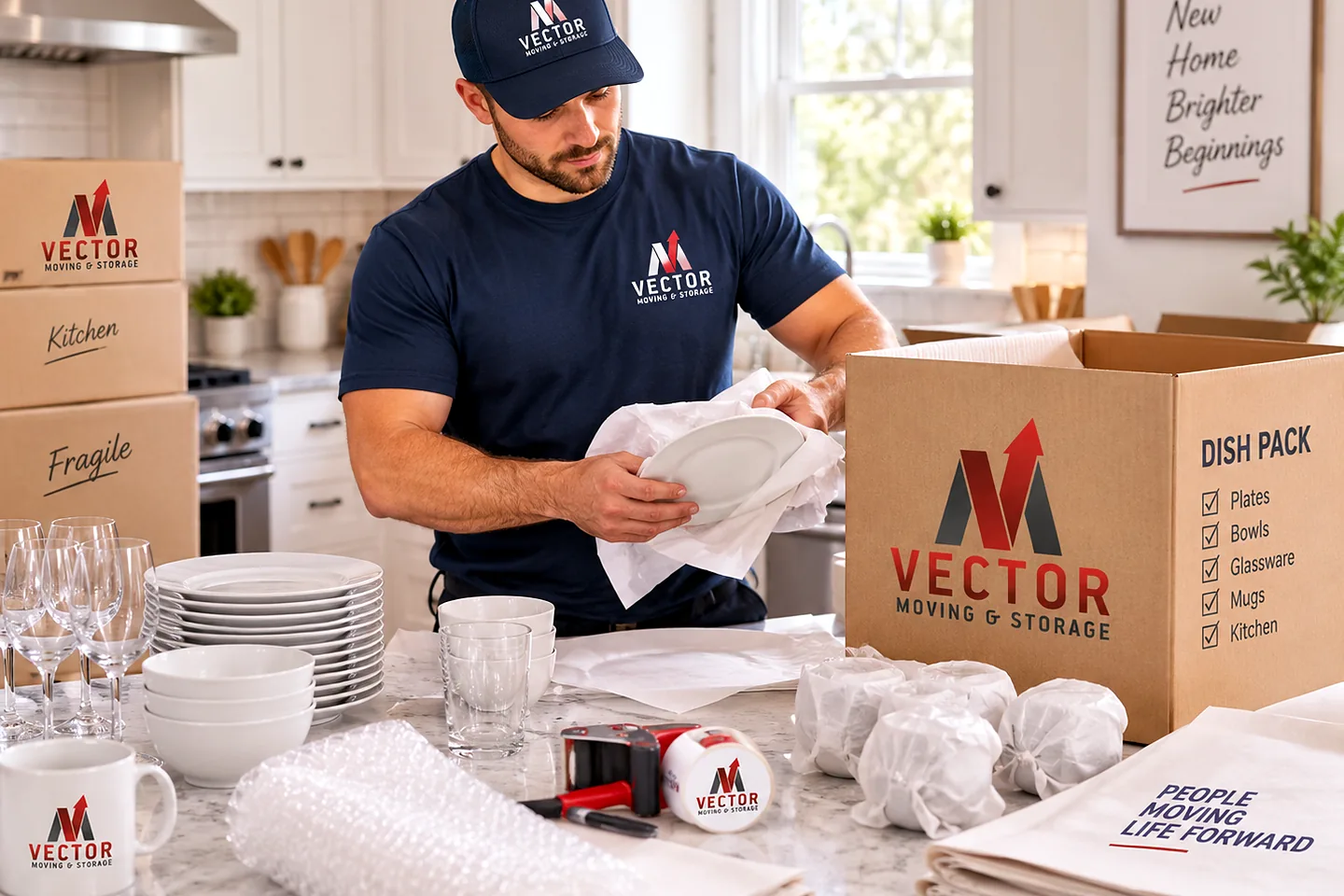
Pack Specialty Items Before Everyday Dishes
A short final-week meal plan lets you pack most of the room without reopening boxes. Keep only the dishes, cookware, food, and appliances needed before moving day.
Self-Packing, Partial Packing and Full Packing
Kitchen packing is not automatically included with every moving service. The written estimate should identify who packs small contents, supplies boxes and materials, prepares appliances, handles fragile collections, and unpacks at the destination.
Self-Packing
You pack eligible kitchen contents into closed, labeled, manageable cartons. Confirm any furniture, appliance, artwork, or specialty work separately.
Partial Packing
Vector can pack selected categories such as dishes, glasses, china, small appliances, fragile serving pieces, or the complete kitchen while you pack other rooms.
Full Packing
The packing crew prepares the agreed eligible contents throughout the home. Larger moves may benefit from a separate packing day before moving day.
Tell the office about crystal, china, collectible cookware, large appliances, wine, open liquids, commercial kitchen equipment, and anything with special handling or environmental requirements.

Build a Material Plan Around the Actual Inventory
Dish-Pack Cartons
Strong cartons for appropriately packed dishes, glassware, serving pieces, and fragile kitchen contents. Dividers may be useful for glasses and stemware.
Small and Medium Boxes
Use smaller cartons for canned goods, cast iron, dense cookware, cookbooks, and appliances. Use medium cartons for lighter general contents.
Clean Cushioning
Packing paper, foam, dividers, bubble cushioning as an outer or secondary layer, and suitable void fill. Keep ink-transfer and food residue away from dishes.
Sharp-Item Protection
Blade guards, rigid cardboard sleeves when suitable, wrapping, tape, and a clearly marked carton that prevents direct contact with exposed blades.
Labels and Box Numbers
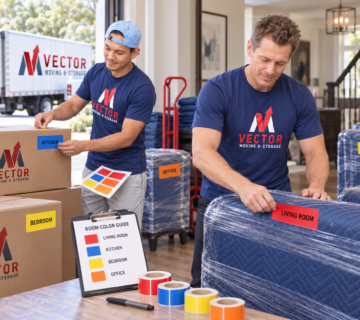
Destination room, contents, FRAGILE or HEAVY handling notes, box number, OPEN FIRST priority, and storage or direct-delivery destination.
Appliance Materials
Original boxes when available, suitable replacement cartons, cord ties, bags for parts, clean cushioning, and manufacturer-specific instructions.
Kitchen Packing Planner
Select the kitchen details for a broad material range. This tool cannot see the cabinets, collections, cookware weight, appliance dimensions, or packing density and is not a quote or fit guarantee.
Estimated Kitchen Material Plan
Standard kitchen planning rangeCushioning: medium-to-heavy supply of clean packing paper and appropriate secondary protection.
How to Pack a Kitchen for Moving With a Dish-Pack Carton
The goal is to prevent movement without compressing fragile rims, handles, stems, lids, or glass surfaces.
Dishes, Glasses, Cookware, Knives and Appliances
Plates and Flat Dishes
Wrap each plate and protect the edges. Pack plates on edge rather than creating one heavy horizontal stack, using cushioning below, between groups, along the sides, and above. Keep the carton manageable and prevent the dishes from touching the box walls.
- Use a dish-pack or another strong appropriately sized carton.
- Keep larger, heavier plates lower than lighter pieces.
- Do not mix cast iron, canned food, or small appliances into the same box.
- Mark the room, contents, FRAGILE, and box number on more than one side.
Bowls, Serving Dishes and Glass Lids
Wrap bowls individually. Nest only compatible pieces with clean cushioning between them; do not force mismatched bowls together. Protect rims, handles, knobs, and decorative edges.
- Pack glass lids separately from heavy pots and pans.
- Use smaller cartons for dense serving pieces.
- Keep glass and ceramic pieces from carrying the weight of cast iron or appliances.
- Fill voids so the wrapped pieces do not slide or rotate.
Cups and Mugs
Wrap each cup or mug and protect the handle from neighboring pieces and the carton wall. Use dividers or stable rows when appropriate, and keep heavy items out of the box.
- Do not place pressure directly on handles.
- Use clean paper inside and around hollow items when appropriate.
- Place heavier mugs below lighter cups.
- Close the carton before it becomes too heavy.
Drinking Glasses, Stemware, Crystal and China
Wrap each item separately and use a cell-divider or another supportive system suited to the glass. For many divider systems, glasses remain upright with the base down. Protect stems independently and avoid squeezing material tightly around delicate projections.
- Use extra clean cushioning for crystal, fine china, and irreplaceable collections.
- Do not allow rims or stems to contact the box wall.
- Keep each cell stable and fill unused space carefully.
- Consider professional or specialty packing for valuable, unusually delicate, or appraisal-controlled collections.
Pots, Pans, Bakeware and Cast Iron
Clean and fully dry cookware before packing. Nest compatible pots or pans only with paper or another non-abrasive layer between finished surfaces.
- Use small cartons for cast iron and other dense cookware.
- Pack glass lids separately and protect handles and knobs.
- Do not place heavy cookware above dishes or stemware.
- Keep sharp accessories, detachable handles, and electrical components controlled and labeled.
Knives and Sharp Kitchen Tools
Never leave knives loose in a carton. Use blade guards when available or create a secure rigid sleeve when suitable, then wrap and control the protected bundle so a person opening the carton cannot contact an exposed blade.
- Keep knife tips and cutting edges completely covered.
- Secure a knife block so the knives cannot slide out.
- Pack peelers, graters, skewers, and other sharp tools with the same care.
- Label the box KITCHEN — SHARP ITEMS and explain how to open it safely.
Small Appliances
Clean and fully dry each appliance. Use the original packaging when available or a suitable box with cushioning below, around, and above the item.
- Remove loose crumbs, water, oil, coffee, and food residue.
- Wrap removable bowls, lids, blades, carafes, and accessories separately.
- Photograph complicated assemblies before disconnection.
- Label the appliance and accessory bag with the same code.
- Secure cords without applying strong adhesive directly to sensitive finished surfaces.
Follow Manufacturer Instructions and Assign Technical Work Clearly
Ordinary kitchen-box instructions do not prepare refrigerators, freezers, dishwashers, ranges, or built-in appliances.
Empty and Clean
Remove food, loose contents, shelves, drawers, water, and residue as directed. Defrost and dry the unit when required.
Disconnect Safely
Gas, water, electrical, refrigeration, plumbing, and manufacturer-specific work may require a qualified technician rather than the moving crew.
Control Parts
Protect removable shelves and drawers, label hardware, and keep manuals, hoses, fittings, and parts with the correct appliance.
Review the Route
Measure the appliance, doors, stairs, elevator, hallways, and destination opening. Confirm weight, special equipment, and floor protection.
Use Food Before the Move and Separate Anything That Can Spill
Dry Pantry Goods
Group sealed dry goods by category, check expiration dates, protect packages that may tear, and use small boxes for canned goods and other dense items.
Refrigerated and Frozen Food
Use, donate, or transport perishables under safe temperature control. Confirm whether the mover accepts any food for the specific move.
Open Liquids and Oils
Do not place leaking or loosely closed oils, sauces, cleaners, or beverages into ordinary dish cartons. Separate them and review eligibility.
Cleaners and Hazardous Products
Some cleaners, aerosols, solvents, fuel, propane, pesticides, and corrosive products require separate disposal or handling and should not be hidden inside household boxes.
Make Every Carton Safe to Carry and Easy to Place
Everyday Dishes
FRAGILE · Box 8 of 14
OPEN FIRST
For storage or multiple destinations, add a code such as VECTOR STORAGE, TEMPORARY HOUSING, STOP 1, or FINAL DELIVERY.
Avoid “Kitchen Stuff”
A vague label does not tell the crew whether the carton contains cast iron, glassware, knives, pantry goods, an appliance, or first-night essentials.
Specific labels also help the customer find the correct carton without opening every kitchen box after delivery.
Keep One Small Kitchen Set Available After Delivery
This carton should be easy to identify and should not contain medications, identification, cash, keys, jewelry, or irreplaceable records, which should remain personally controlled.
Basic Dishes
A few plates, bowls, cups, mugs, utensils, and one or two practical pieces of cookware.
Cleaning and Paper Goods
Dish soap, new sponge, paper towels, trash bags, hand soap, and basic surface-cleaning supplies that are eligible and securely transported.
Food and Drinks
Water, shelf-stable snacks, coffee or tea supplies, pet feeding items, and special dietary necessities kept under appropriate conditions.
Useful Small Items
Bottle opener, can opener, scissors kept safely controlled, chargers, and the appliance parts needed for the first meal.
Plan for More Than One Handling Stage
Kitchen cartons may go through packing, loading, transportation, possible warehouse handling, storage, reloading, and final delivery.
Long-Distance Move
Use intact cartons, complete cushioning, clear box numbers, customer-carried valuables, and delivery labels that remain useful through the full route.
Warehouse Storage
Keep boxes dry, closed, stackable, numbered, and free of perishables and open liquids. Separate anything needed before scheduled final delivery.
Multiple Destinations
Use NEW HOME, VECTOR STORAGE, TEMPORARY HOUSING, DONATION, STOP 1, or OPEN FIRST in addition to the room name.
Open Priority Cartons on a Stable Surface
When an item is damaged or missing, preserve the relevant carton, wrapping, photographs, inventory information, receipts, and moving documents while the issue is reviewed. Do not use ordinary cleanup as a reason to discard evidence.
Read the moving damage claims guide →Connect Kitchen Packing to the Complete Move
Professional Packing Services
Arrange full packing or partial help with dishes, kitchens, artwork, closets, offices, and fragile household contents.
Professional packing services →Room-by-Room Packing Guide
Plan the rest of the home, including bedrooms, closets, office, bathrooms, garage, furniture, essentials, and storage.
Complete room-by-room packing guide →Moving Box Calculator
Estimate standard boxes, dish packs, wardrobe boxes, and specialty cartons by home size and household density.
Estimate moving boxes →Artwork Packing
Review paintings, framed art, mirrors, photographs, sculptures, condition records, picture boxes, and specialty packing.
How to pack artwork for moving →Local Moving
Coordinate household pickup, furniture preparation, loading, approved stops, transportation, and delivery.
Local moving services →Restricted and Customer-Carried Items
Review products that may be hazardous, restricted, unsuitable for storage, or better kept personally controlled.
What cannot be moved by movers? →Frequently Asked Questions
What should I pack first in the kitchen?
How early should I begin packing the kitchen?
How many boxes do I need for a kitchen?
Should plates be packed flat or on their side?
How do I pack bowls for moving?
How do I pack cups and mugs?
How do I pack wine glasses and stemware?
How do I pack pots, pans and glass lids?
How should kitchen knives be packed?
Can I pack food in the moving truck?
How do I move refrigerated or frozen food?
How do I pack small appliances?
Should I empty the refrigerator before moving?
Can movers pack only my kitchen?
What belongs in an open-first kitchen box?
How should kitchen boxes be labeled?
What should I do when a dish is damaged during the move?
Request Full or Partial Packing for Your Move
Tell Vector Moving and Storage about the kitchen size, dishes, stemware, china, cookware, pantry, small appliances, large appliances, packing status, moving date, route, access, storage, and specialty items. The team can review the project and explain the available packing and moving options.







No comment