
What Size Storage Unit Do I Need for My Belongings?
What size storage unit do I need? The answer depends on the actual inventory, furniture dimensions, box count, household density, ceiling height, safe stacking, walkways, access needs, and whether you are renting traditional self-storage or using mover-managed warehouse storage.
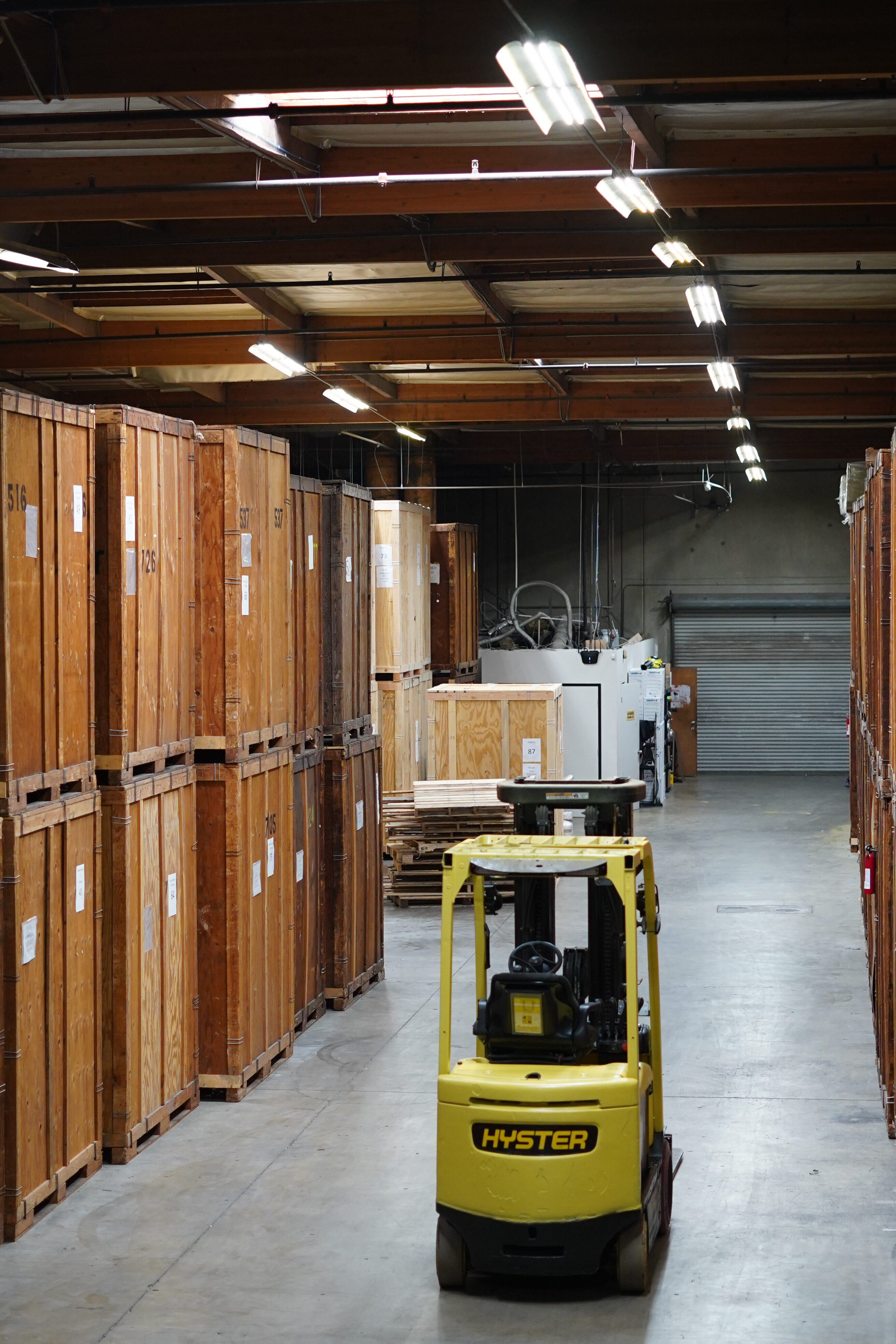
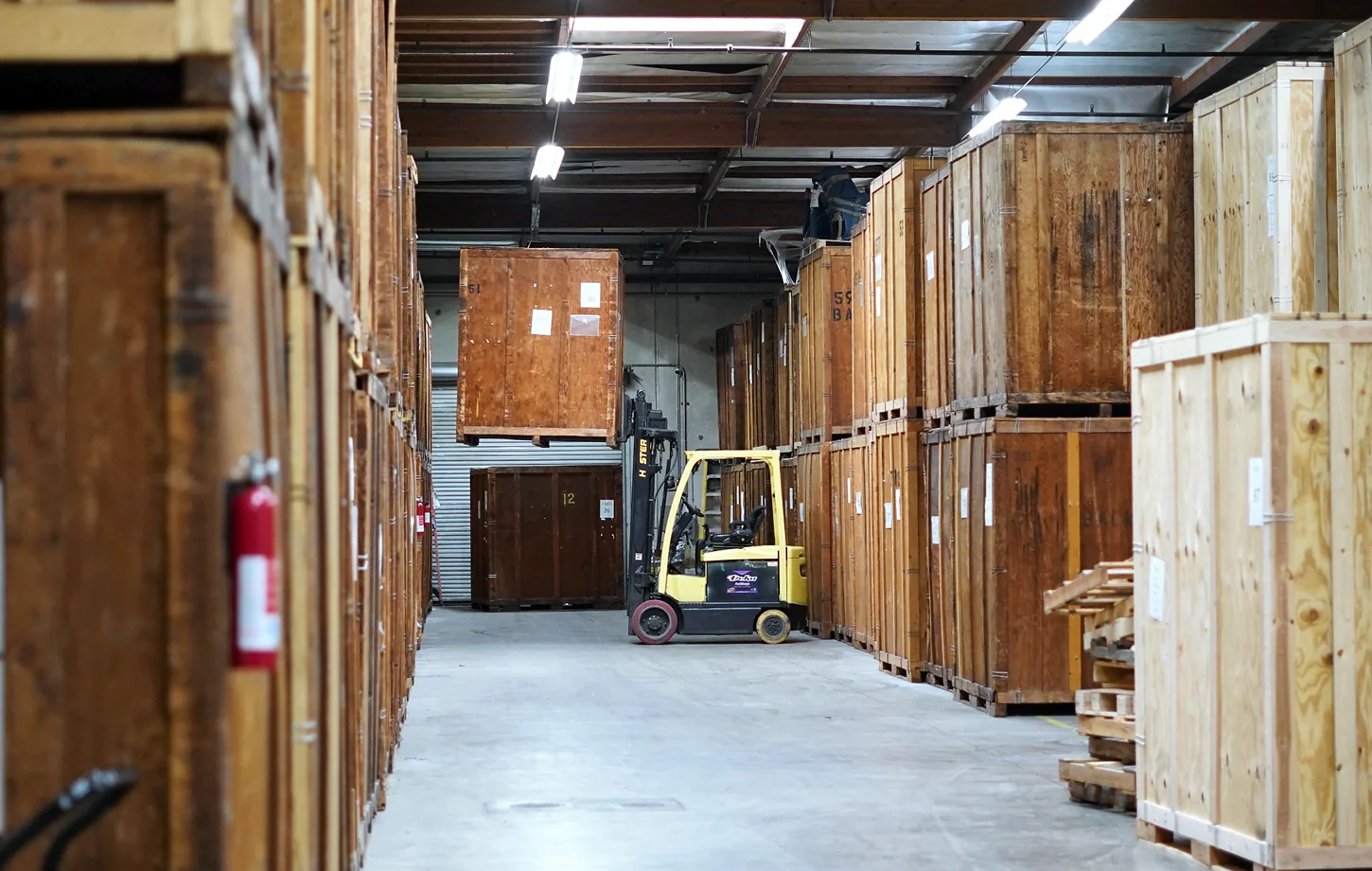
Vector Moving and Storage uses moving vaults for many warehouse-storage shipments. Each vault is approximately 5 feet wide × 7 feet long × 7.5 feet high. This guide compares common self-storage sizes with Vector moving vaults and explains why floor area alone cannot guarantee what will fit.
Common Storage Unit Dimensions and General Planning Uses
These examples are broad starting points, not fit guarantees. Available dimensions, ceiling height, door size, features, access rules, and actual capacity vary by facility.
5 × 5 Unit
25 sq. ft.Often considered for seasonal belongings, boxes, files, small furniture, sports equipment, or selected closet contents.
5 × 10 Unit
50 sq. ft.A common starting point for one room, selected studio contents, a bedroom set, bicycles, boxes, or a remodeling project.
10 × 10 Unit
100 sq. ft.Often considered for a one-bedroom apartment, several rooms, a small office, furniture, appliances, and moving boxes.
10 × 15 Unit
150 sq. ft.A broader multi-room option that may suit a two-bedroom apartment, renovation contents, office furniture, or several appliances.
10 × 20 Unit
200 sq. ft.Often considered for a larger household, multiple bedrooms, major appliances, renovation storage, or a substantial business inventory.
10 × 30 Unit
300 sq. ft.A large traditional unit for a major whole-house project or substantial inventory, subject to the facility’s dimensions and access.
How Large Is One Vector Moving Vault?
Vector’s warehouse-storage plan may use one or more enclosed moving vaults instead of assigning the customer a walk-in unit labeled 5 × 10 or 10 × 10.
One Vault: Stated Dimensions
Each Vector moving vault is approximately 5 feet wide × 7 feet long × 7.5 feet high.
The office should review the inventory and photographs before confirming how many vaults are likely to be required. The final quantity can also change when additional belongings appear at pickup or when items cannot be safely stacked as expected.
| Number of Vaults | Combined Gross Footprint | Combined Gross Geometric Volume |
|---|---|---|
| 1 | 35 sq. ft. | 262.5 cu. ft. |
| 2 | 70 sq. ft. | 525 cu. ft. |
| 3 | 105 sq. ft. | 787.5 cu. ft. |
| 4 | 140 sq. ft. | 1050 cu. ft. |
| 5 | 175 sq. ft. | 1312.5 cu. ft. |
| 6 | 210 sq. ft. | 1575 cu. ft. |
| 7 | 245 sq. ft. | 1837.5 cu. ft. |
| 8 | 280 sq. ft. | 2100 cu. ft. |
The table multiplies the stated vault dimensions mathematically. It does not promise that a shipment occupying the same theoretical cubic volume will fit into that number of vaults.
Compare a Traditional Unit With Vector Moving Vaults
This calculator compares gross geometry only. It does not estimate how efficiently real furniture and boxes will load or replace an inventory review.
Gross Dimension Comparison
10 × 10 unitThe 10 × 10 × 8 ft unit equals approximately 3.05 Vector-vault volumes geometrically.
Measure the Large Items and Count the Boxes
The number of bedrooms is useful only as a starting point. Make a written inventory and include every room, closet, garage, patio, storage area, office, and additional pickup location.
Provide photographs and dimensions for large, fragile, heavy, custom, or difficult-to-stack items. A sectional, large dining table, stone piece, safe, exercise machine, or oversized mirror can affect the number of vaults even when the overall home is not large.
Square Feet and Cubic Feet Do Not Tell the Whole Story
Floor Area
Width multiplied by depth gives square feet. This shows the footprint, but not the effect of ceiling height or stackability.
Gross Geometric Volume
Width × depth × height gives a theoretical cubic volume. It does not subtract walls, door structure, padding, empty gaps, or fragile-item limits.
Safe Stackability
Strong closed boxes may stack efficiently. Sofas, glass, lamps, loose furniture, artwork, and irregular items may require protected open space.
Access Space
Traditional self-storage customers who expect frequent access may need aisles or open space that reduces practical capacity.
Dense Storage and Access-Oriented Storage Need Different Space
Dense Storage
Useful when the customer does not expect frequent access and wants to maximize the practical footprint. Items needed later should be clearly labeled and placed according to the delivery plan.
Access-Oriented Self-Storage
A traditional walk-in unit may need aisles and open space so selected boxes or furniture can be reached without unloading the entire unit.
Scheduled Warehouse Retrieval
Vector vault access, partial retrieval, extra handling, return to storage, or additional delivery should be arranged through the office and may involve labor and scheduling.
Choose the Storage Model That Fits the Move
Traditional Self-Storage
The customer rents a unit—such as 5 × 10 or 10 × 10—and usually controls the lock and routine access during facility hours. The customer is generally responsible for transportation, loading, organization, and later removal unless separate moving help is arranged.
- Useful when routine access is important
- Customer selects the physical unit size
- Facility controls features and access hours
- Walkways may require a larger unit
Vector Mover-Managed Warehouse Storage
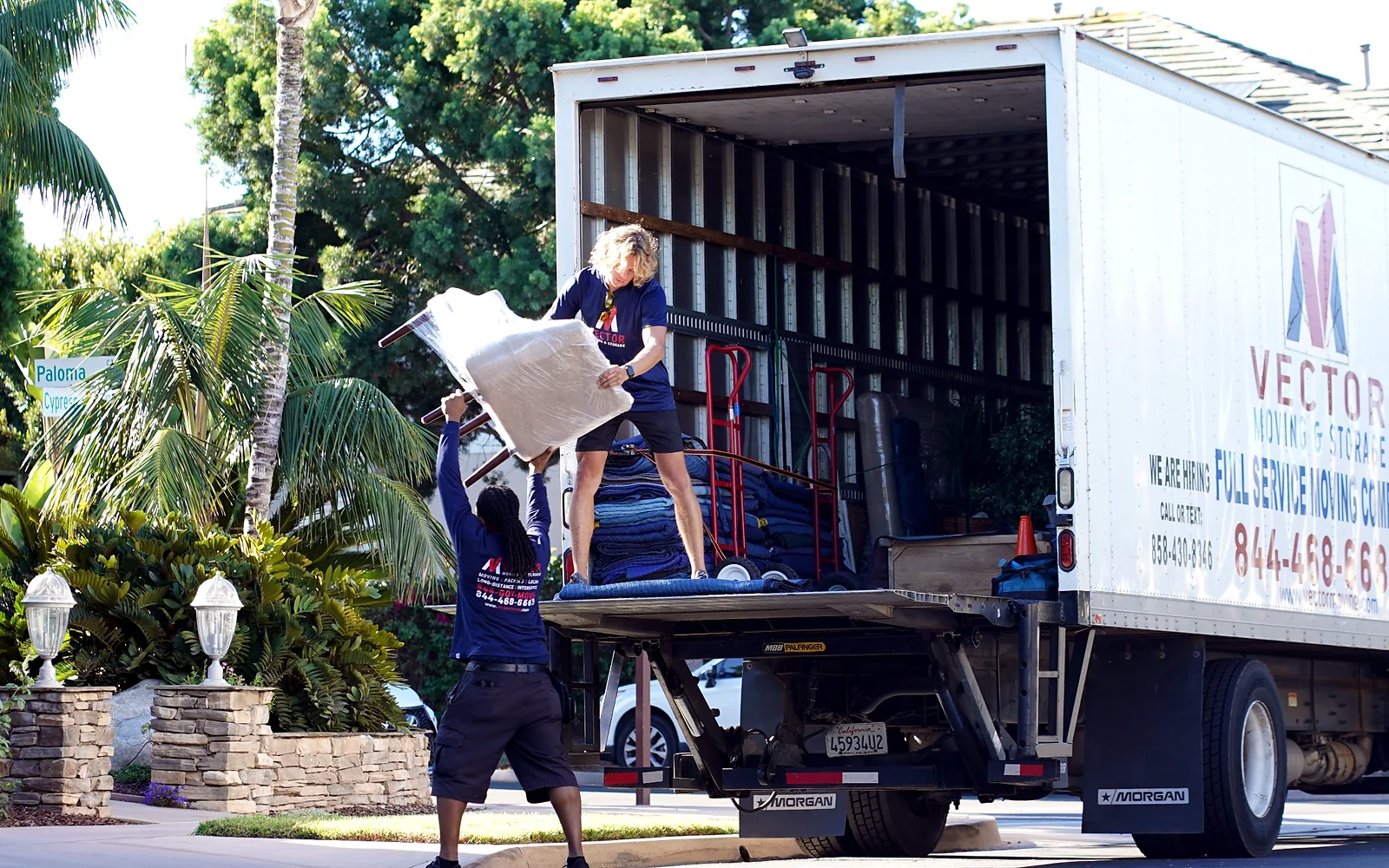
Vector can coordinate pickup, furniture preparation, transportation to the warehouse, loading into moving vaults, storage, and scheduled final delivery. The storage footprint is planned from the actual shipment rather than assigning a public walk-in unit size.
- Moving vaults are approximately 5 × 7 × 7.5 ft each
- Wooden vaults can be positioned with forklift equipment
- Access and retrieval are scheduled through the office
- Useful when the customer wants one coordinated move-and-storage plan
Use Closed, Labeled and Stackable Cartons
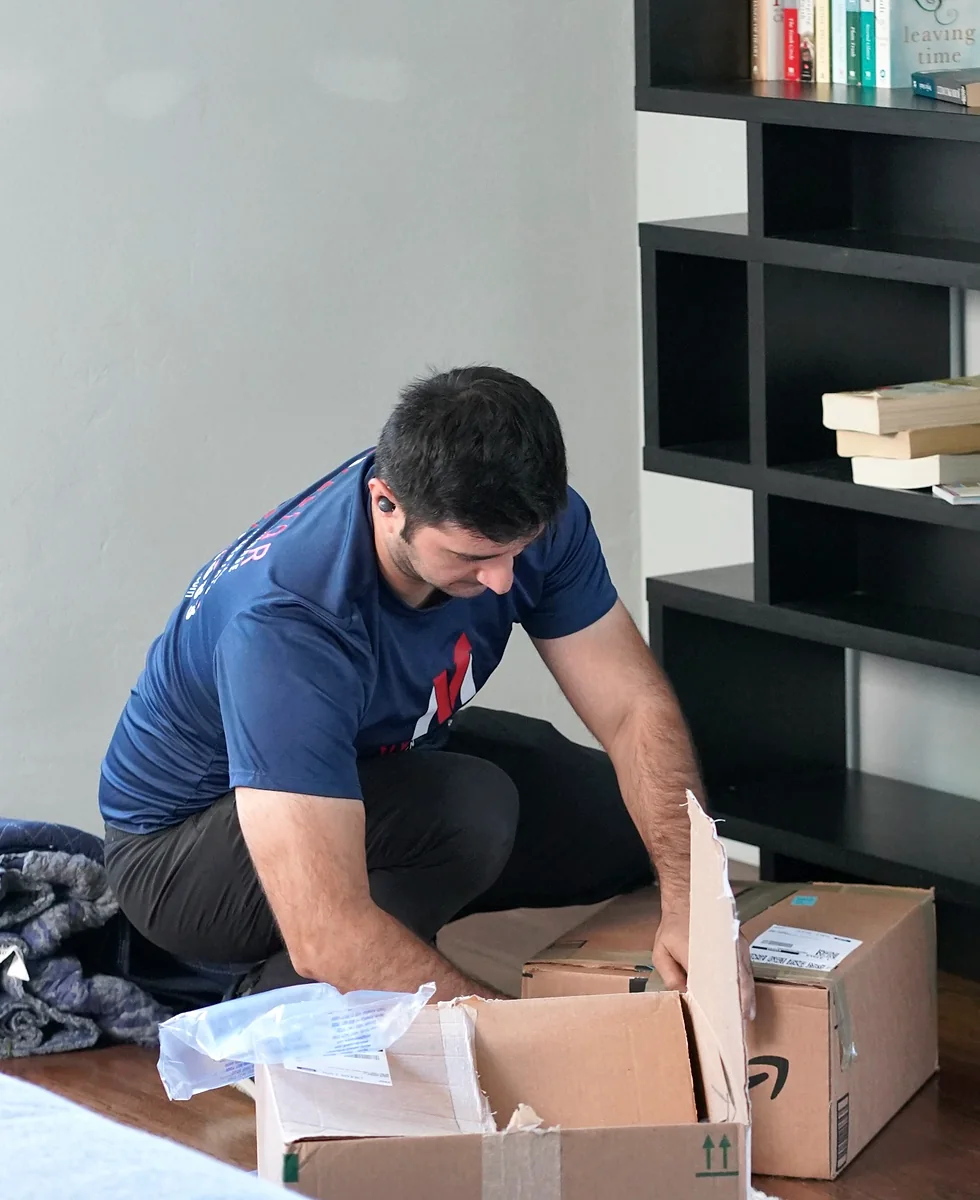
Storage packing should make the shipment easy to identify months later and support the final-delivery plan. Use stronger cartons for dense belongings, keep box tops flat, fill empty space, and avoid overloading.
Use Height Carefully—Do Not Build an Unstable Stack
Disassembly can reduce the footprint of some beds, tables, shelving, and standard furniture, but it should not be assumed for antique, built-in, mechanical, damaged, or unfamiliar pieces. Keep hardware in sealed labeled bags and avoid adhesive directly on finished surfaces.

Do Not Assume Every Storage Facility Offers the Same Conditions
Indoor or Outdoor Access
Confirm whether the unit opens into a building, hallway, elevator area, or outdoor drive aisle.
Temperature or Humidity Control
Confirm the exact feature, operating range, limitations, and price with the facility. Do not assume ordinary warehouse storage is climate-controlled.
Door and Elevator Dimensions
Measure large furniture and confirm that items can pass through the unit door, hallways, gates, and elevators.
Access Hours
Routine, after-hours, weekend, and appointment access vary. Vector vault access is scheduled through the moving office.
Insurance or Protection Requirements
Review the facility or storage agreement and understand what protection is included, required, or purchased separately.
Security and Pest Procedures
Ask about locks, cameras, gates, alarms, inspections, pest-control practices, and how incidents are reported.
Do Not Plan Ordinary Storage for Hazardous, Perishable or Critical Items
The written agreement and facility rules control the exact restrictions. As a general planning rule, keep these out of ordinary household storage unless the provider specifically accepts them under lawful conditions.
Hazardous or Flammable Materials
Fuel, propane, fireworks, corrosive chemicals, pesticides, solvents, some paints, leaking batteries, and other regulated materials.
Food and Perishables
Fresh or frozen food, open packages, items that attract pests, and anything likely to spoil, leak, or produce odor.
Cash, Jewelry and Critical Records
Passports, identification, financial records, keys, irreplaceable documents, and valuable items that should remain with the customer.
Medication and Immediate Essentials
Prescription medication, medical devices, work equipment, pet supplies, and belongings needed before scheduled final delivery.
Frequently Asked Questions
What size storage unit do I need for a studio?
What size storage unit do I need for a one-bedroom apartment?
What fits in a 5 × 10 storage unit?
What fits in a 10 × 10 storage unit?
How large is one Vector moving vault?
How many Vector vaults do I need?
Is one Vector vault the same as a 5 × 7 self-storage unit?
Does Vector rent 5 × 5 or 10 × 10 walk-in units?
Can I access belongings stored in Vector moving vaults?
Should I rent a larger traditional unit to create a walkway?
Can I maximize capacity by stacking everything vertically?
Is Vector warehouse storage climate-controlled?
How should boxes be labeled for storage?
What should not be placed in ordinary storage?
Can Vector pick up, store, and later deliver my belongings?
Pickup, Vault Storage and Final Delivery
Vector Moving and Storage can review the pickup address, complete inventory, packing, number of boxes, furniture dimensions, specialty items, expected storage duration, access requests, and final delivery property.
The quote should explain the moving labor, packing or materials, transportation, storage handling, estimated vault needs, scheduled access, partial retrieval, additional delivery, and final move-out from storage when applicable.
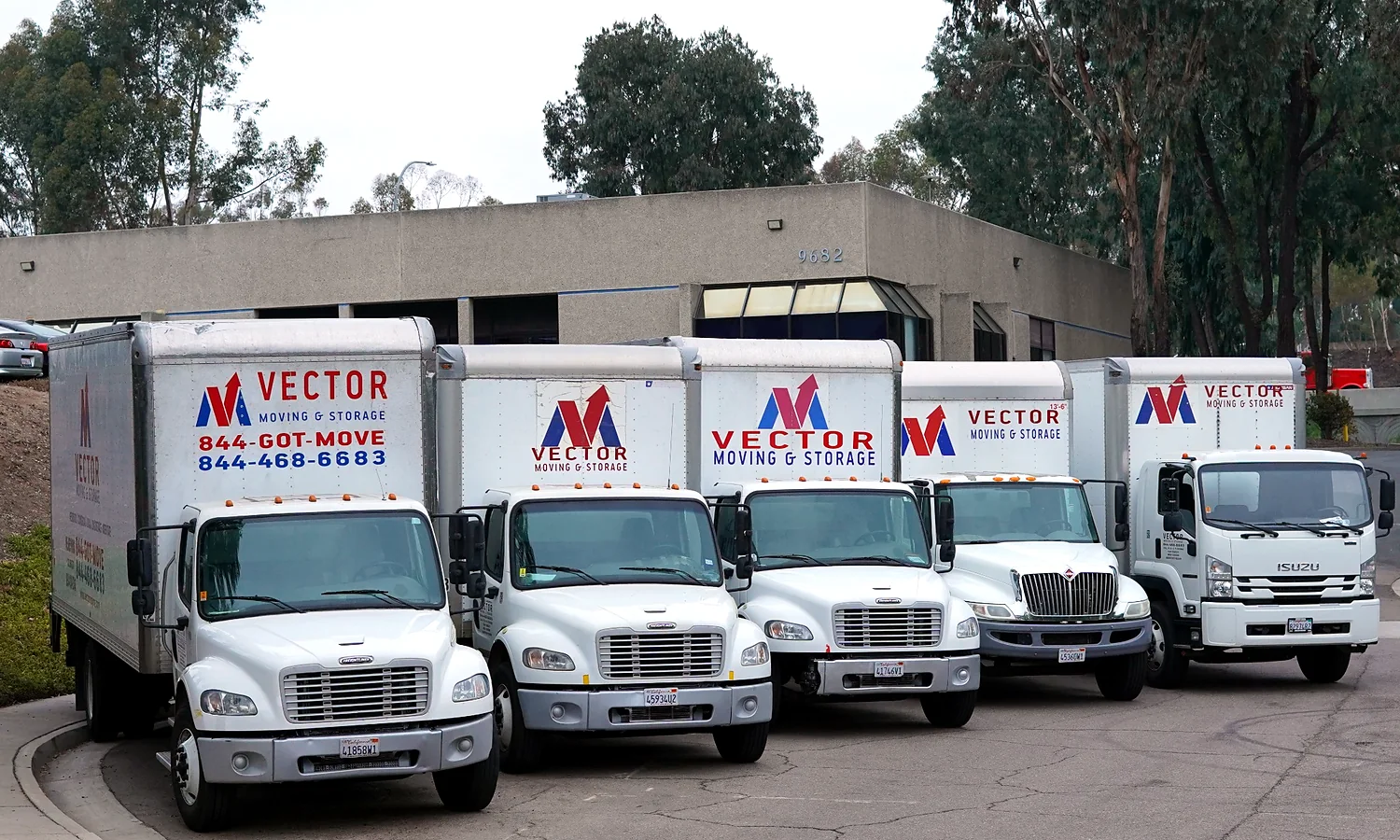
How Many Moving Vaults Does Your Shipment Need?
Send Vector Moving and Storage the pickup address, furniture inventory, estimated box count, photographs, storage duration, access needs, specialty items, and final delivery information. The office can review the shipment and explain the likely vault plan and written storage options.





No comment