
San Diego business moving guide
Moving an Office Within the Same Building: A San Diego Planning Guide
New workspaces. The same address. Plan the route, furniture sequence, and final placement.
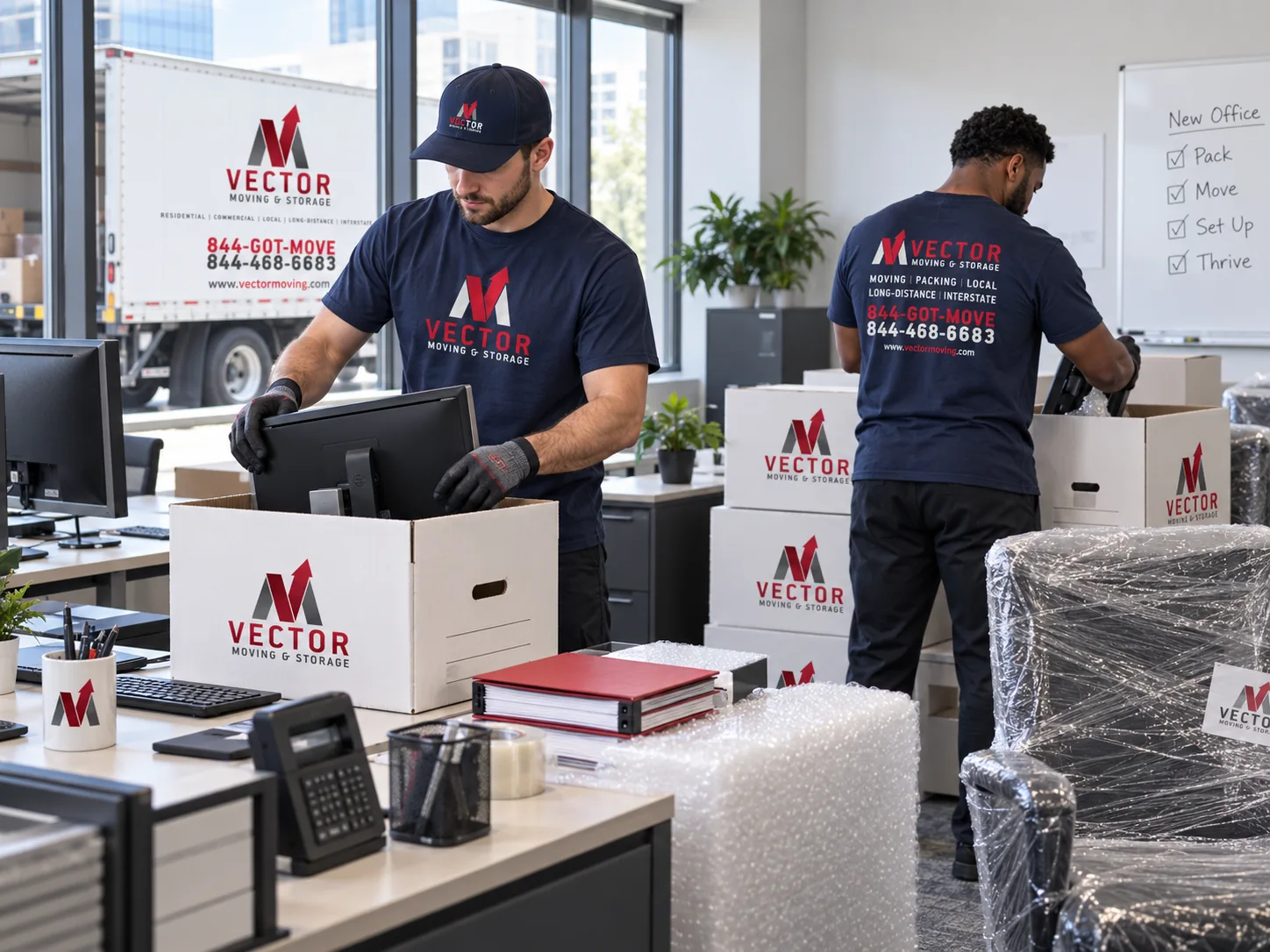
Moving an office within the same building in San Diego can mean shifting a few workstations, taking over a neighboring suite, or relocating an entire department to another floor. Vector Moving and Storage’s commercial movers in San Diego can help with internal office moves, furniture handling, and workspace changes based on the inventory, building access, and agreed scope.
The address may stay the same, but the route and placement plan still matter. A desk might need to pass through several doorways, a shared corridor, and an elevator before reaching its new position. And when the destination is still occupied, something else must move first.
Define the kind of internal office move you need
Start by describing what is changing. “Moving ten desks” leaves out whether those desks are going across an open floor, through a narrow suite entrance, or up several levels.
Three types of internal office moves
Same-floor rearrangement
- Typical situation
- Repositioning desks, meeting tables, or a reception area within the current suite.
- Main planning question
- Which items must move first to create working space?
Suite-to-suite move
- Typical situation
- Expanding into adjacent space or consolidating two suites on the same floor.
- Main planning question
- Is the route shared with other tenants, and is the receiving suite ready?
Floor-to-floor relocation
- Typical situation
- Moving a department, file room, or furniture between building levels.
- Main planning question
- Which elevator or approved route can accommodate the actual items?
A project can combine all three. Mark each portion separately so the crew understands the sequence, access needs, and furniture that will remain in place.
Make a move list with an exact starting point and destination
For an internal move, “Accounting” is often too vague. The department may keep the same name while changing floors, and identical desks may belong in different rooms.
Give every furniture piece or related group a simple identifier. Record:
- Item: A description and matching number, such as desk D-12.
- Starting point: Floor, suite, and current room or workstation.
- Destination: Floor, suite, and final room or workstation.
- Action: Move, stay, temporarily relocate, or send to an agreed off-site destination.
- Preparation: Contents to remove, disassembly to review, and any vendor work needed first.
For example, a move-list entry might read: D-12 / Floor 2, Suite 210 / Floor 4, Suite 410, Desk 07 / Move / Clear desktop and disconnect approved equipment. Put the destination code on the item and the floor plan.
Distinguish furniture ownership from employee assignment. If employees switch desks but the desks remain in place, label the employee’s packed contents for the new workstation without marking the stationary furniture for moving.
Plan room swaps before either room is emptied
Two occupied departments cannot simply exchange spaces at the same moment. The plan needs a temporary holding area, an empty destination, or another agreed sequence that creates room to work.
Consider this hypothetical example: a small San Diego office is swapping the furniture in a meeting room and a training room. Management approves an unused room for temporary staging, and the crew reviews the access and available space.
- Move the designated meeting-room items into the approved staging room.
- Transfer the training-room furniture into its marked positions in the cleared meeting room.
- Move the staged furniture into the former training room.
- Check final placement and clear the temporary staging room.
This example illustrates the sequence; it is not a completed Vector project or a fixed moving schedule. Every piece handled twice adds work, so identify temporary moves when requesting an estimate.
If there is no suitable staging space, discuss a different sequence before moving day. A shared hallway or elevator lobby should not become an improvised furniture storage area.
Walk the full route between the old and new positions
An item that fits inside the destination room may not fit through the route leading to it. Review the tightest doorway, corridor turn, elevator entrance, and landing with the moving company.
For floor-to-floor office moves, obtain the building’s approved elevator arrangement. Ask about the car’s usable dimensions, doorway opening, stated capacity, reservation hours, protective padding, and whether an authorized operator is required. Send that information with measurements or photographs of oversized furniture.
Do not assume a passenger elevator is available for furniture or that stairs will be a workable fallback. Large conference tables, stone tops, tall cabinets, and complex workstations need individual review.
A Downtown San Diego tower and a low-rise business complex may offer very different internal routes. The actual building layout determines the plan, even when the move covers only one floor.
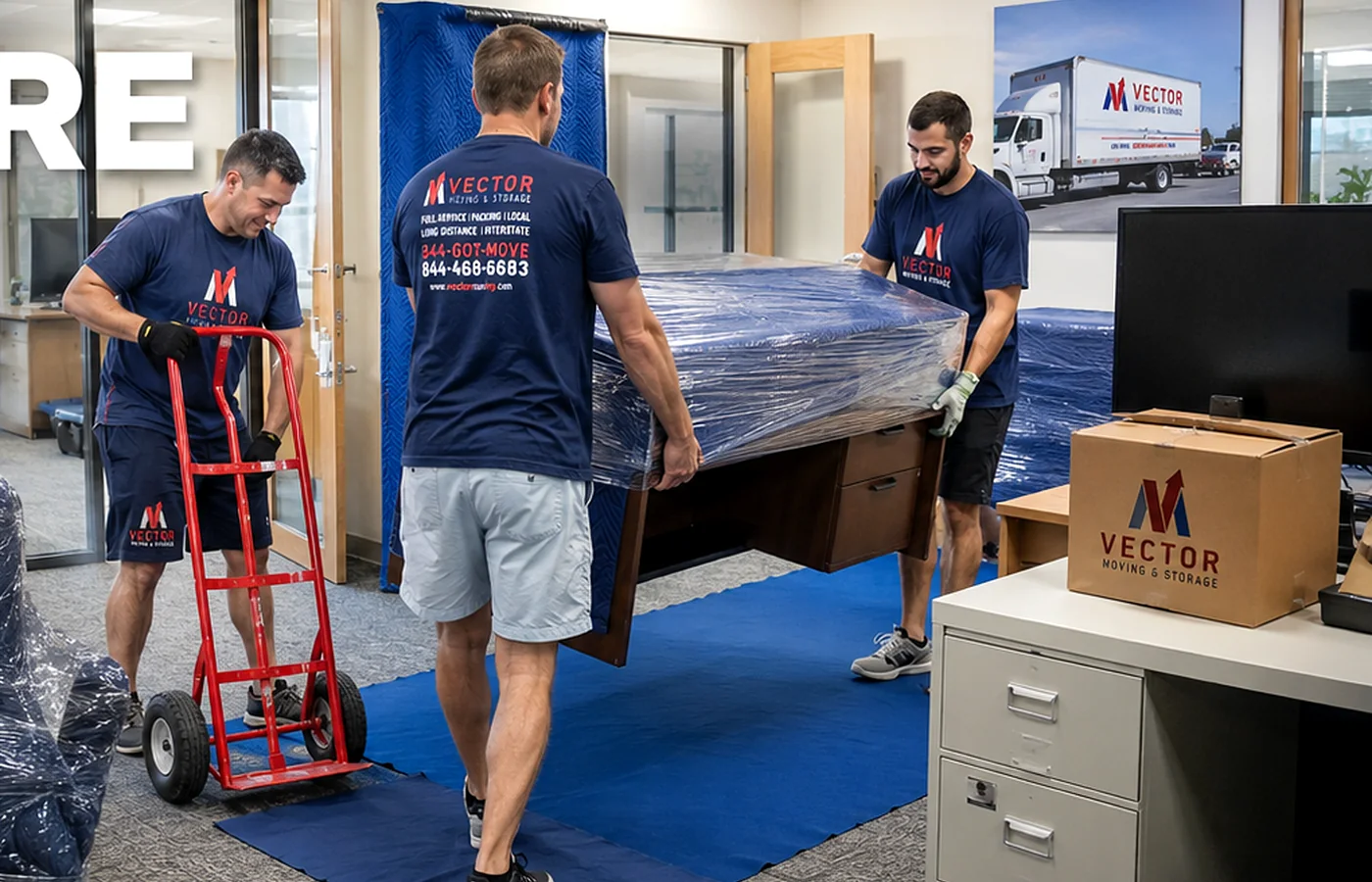
Confirm what can move intact and what needs preparation
Short distances still require furniture preparation. Loose shelves, open drawers, desktop equipment, and unsecured contents can complicate handling within a suite just as they can during a move to another address.
Ask which drawers and cabinets must be emptied. Keep keys, hardware, and accessories associated with the correct furniture, and tell the crew about prior damage or loose components.
Review these items before scheduling:
- Large desks and conference tables that may need eligible disassembly.
- Modular furniture connected to neighboring workstations.
- Sit-stand desks with controls, cables, or accessories to prepare.
- Wall-mounted, anchored, built-in, or electrically connected items.
- Leased copiers, server equipment, and other items requiring a separate vendor.
Moving furniture does not automatically include electrical work, network changes, wall repairs, or installation of specialized furniture systems. Confirm the division of work with your facilities team, IT provider, and any required installers.
For boxed files, desktop contents, and selected office areas, professional packing services can be included in the requested scope. Pack only the contents that need to relocate, using labels that match the internal move list.
Separate occupied work areas from the moving route
Employees may remain in the building during an internal move. Give them a clear notice identifying the affected rooms, the moving window, and where they should work while furniture passes through their area.
Arrange an approved staging area and keep exit routes clear of furniture, cartons, and equipment. OSHA’s exit-route guidance explains why temporary obstructions also matter. Coordinate the route with building management when other tenants share the corridors or elevators.
Complete IT disconnection before the relevant workstation is released for moving. After placement, your technology team can reconnect and test the equipment. Keep that handoff specific to the workstations being changed so unaffected areas can continue their normal work where practical.
What affects the cost of moving an office inside a building?
An internal move may avoid transporting office contents between street addresses, but labor, equipment, preparation, and building access still affect the estimate. The distance on a map says little about the work involved.
Important details include the number and size of the items, the carrying route, elevator availability, eligible disassembly, packing, and the number of times each piece must be handled. Moving a cabinet directly to its final location is different from staging it temporarily and moving it again later.
Also identify waiting periods or separate work sessions. For example, furniture may need to leave a room before flooring work begins and return on a later date. Those are two planned stages, even though the furniture stays in the same building.
Ask how crew time, equipment delivery, any vehicle or travel charges, minimums, and additional visits are handled. If no office contents need off-site transportation, describe that clearly and ask Vector to confirm the appropriate service arrangement and charges. Do not assume that an internal move eliminates every truck-related cost.
Send these details with your internal moving request
A useful request includes the building address, both suite or floor numbers, the moving date, approved hours, and one company contact authorized to make placement decisions. Attach the furniture list, destination plan, photographs, and relevant building instructions.
Explain what stays, what moves once, and what needs temporary staging or a later return visit. Identify any packing, specialty vendors, or off-site storage requirements before booking.
If your project expands into a relocation to another address, use our San Diego office relocation checklist for the broader preparation timeline.
Questions about moving an office within the same building
Can Vector move furniture between floors without changing our address?
Yes. Internal and floor-to-floor moves are among Vector’s commercial moving services. Share the furniture inventory, floor numbers, elevator information, and preferred date so we can review the project.
Do we need to pack everything in the office?
Only the affected areas may need packing, depending on the scope. Confirm which contents must be removed from furniture and distinguish stationary items from items being moved. Prepare sensitive records and employee belongings according to company policy.
Can you move our cubicles or modular workstations?
Send photographs, dimensions, and manufacturer or system details when available. Disassembly and reassembly depend on the furniture and agreed scope. Integrated power, complex installations, or anchored components may require appropriate outside providers.
What if the furniture will not fit in the elevator?
Have the moving company review the item and route before moving day. Eligible disassembly or another approved route may be possible. Do not assume stair handling, hoisting, or modifications to the building are included or feasible.
Plan your internal office move with Vector
Whether you are combining suites, moving a department upstairs, or rearranging your current workspace, a clear item list and placement plan give the crew a useful starting point.
Review our commercial and office moving services in San Diego, then request an internal office moving quote or call 844-468-6683. Tell us what needs to change inside the building, and we will review the handling, access, and service options for your project.
Request an Internal Office Moving Quote