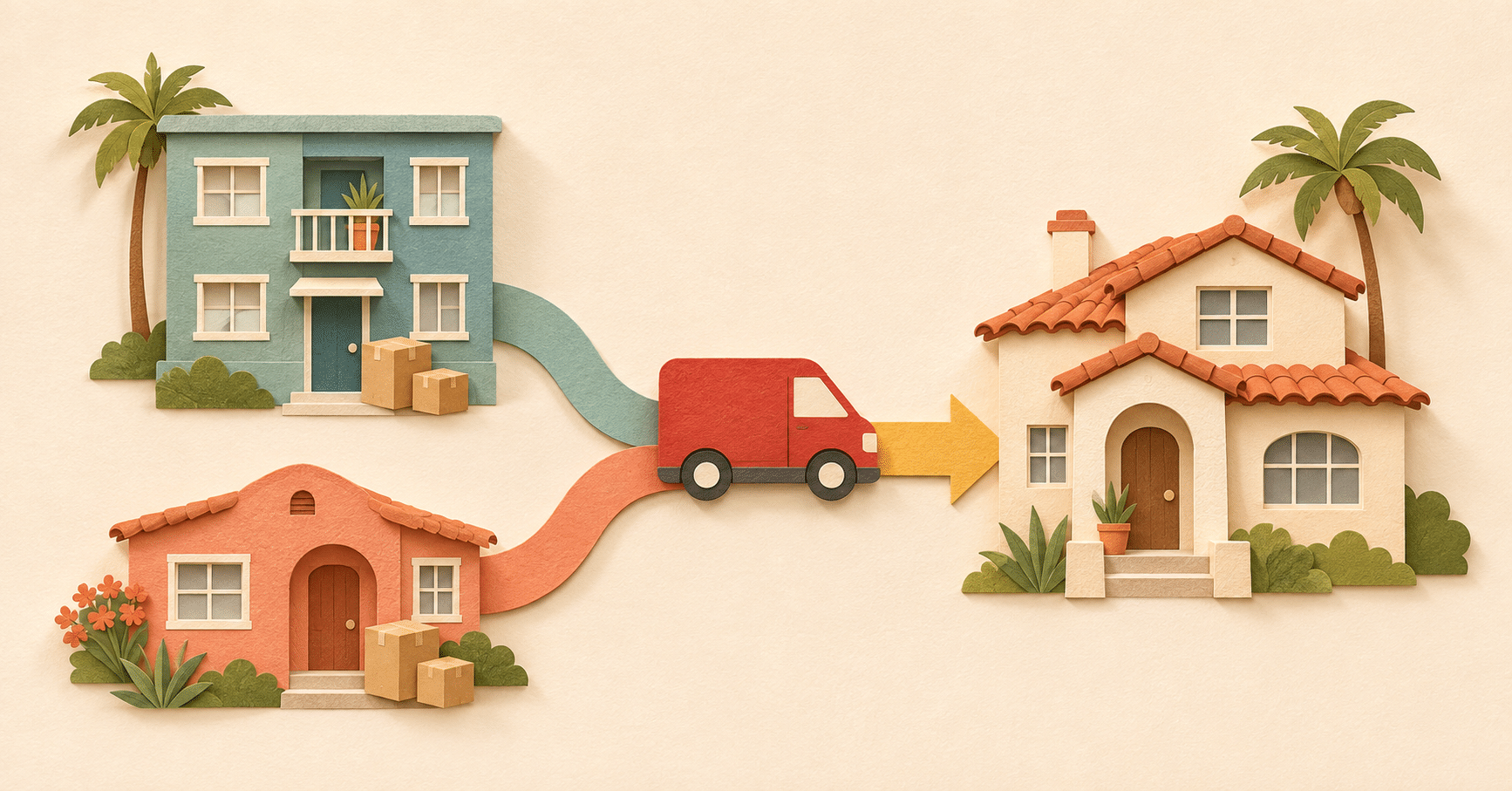
Yes, you can ask a moving company to pick up from two homes and deliver to one. For a San Diego move, send Vector all three street addresses, a separate furniture and box count for each pickup, and the times you can get into each building. Ask the office to confirm both pickups and the final delivery on the written estimate before you book.
Make the second pickup visible in the quote
Say “two pickups, one delivery” at the start of your request. If you list only the first apartment and the new home, a second apartment’s worth of furniture can look like a quick stop to pick up a single item. “Stop B adds a queen bed, a desk and 18 cartons” gives the estimator something to plan around.
Walk through each home separately. At each one, decide what goes on the truck, what someone will carry in their car and what stays. When two households are moving in together, settle the big duplicates first. If both people list a sofa but only one fits in the new living room, identify the one that goes by description and pickup address. A photo of the chosen sofa can save a phone call while the crew is loading.
Which home should the movers visit first?
Start with the time you have the least control over. Imagine a North Park renter moving in with a partner from Mission Valley. The North Park apartment has stairs and flexible checkout. The Mission Valley building has offered a morning freight-elevator reservation. The couple gets the keys to their new Clairemont home at noon.
In that example, it makes sense to ask the mover to price Mission Valley first, North Park second and Clairemont last. Send the actual elevator window and key time. The mover can check whether loading and travel fit. If they don’t, it’s better to ask about a later elevator slot before booking than to have a loaded truck arrive at a locked door. If both pickups have fixed windows, ask the estimator to compare a combined move with separate appointments.
Three stops, one note you can copy
Fill in this note together. Give each stop its own line, even when two stops share a ZIP code.
- Pickup A: Street address and unit ___ · items and box count ___ · stairs or elevator ___ · where the truck can load ___ · available from/until ___ · person opening the door ___.
- Pickup B: Street address and unit ___ · items and box count ___ · stairs or elevator ___ · where the truck can load ___ · available from/until ___ · person opening the door ___.
- Final delivery: Street address and unit ___ · when keys are available ___ · unloading access ___ · person directing furniture placement ___.
If one person holds the keys for two stops, tell the mover how that person will get from one to the other. If a building has assigned a loading bay, share which entrance it serves. The front door you use every day may be on the opposite side of the block.
Will combining the pickups cost less?
It depends on the two inventories, the route and the time spent loading at each building. A second pickup means another place to park and another carry from the door to the truck. An elevator that is ready when the crew arrives can make a different plan workable. When comparing estimates, use the same item lists and time windows each time. Check that each estimate names both pickups and explains how travel, the truck/fuel fee and any waiting time are handled.
Give each household a final check
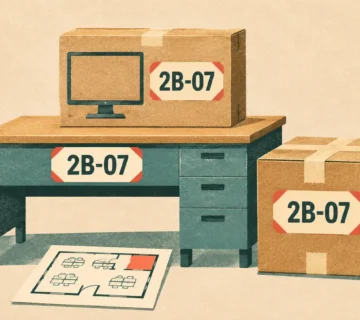
Label cartons with their destination room and, when it helps, their pickup letter. “Office — B” tells you which desk supplies belong together if both households have a carton labeled “Office.” At each pickup, have the person with the keys check the closets, patio and storage locker before the crew leaves. Keep the new-home keys with the person meeting the truck.
Vector’s local moving services in San Diego include planning for approved extra stops. When you’re ready, paste your three-stop note into your San Diego moving quote request and flag any building times you’re still waiting to confirm.