San Diego Office Relocation Checklist: Access, IT, Furniture & Downtime
This San Diego office relocation checklist helps business owners, office managers and move coordinators organize the work that must happen before movers arrive. It covers building requirements, loading access, employee responsibilities, technology, records, furniture, packing, storage and the first day in the new location.

Why an Office Move Is More Than Moving Desks
A household move is organized around rooms and personal belongings. An office relocation is organized around departments, workstations, technology, records, vendors, building rules and the date the company must be operational again.
The moving crew can pack approved items, prepare furniture, transport the shipment and place labeled pieces at the destination. Your company still needs to control decisions that belong to management, building personnel, IT providers, security vendors and employees.
For service details, see Vector’s commercial and office movers in San Diego page. This guide stays focused on preparation rather than repeating the service page.

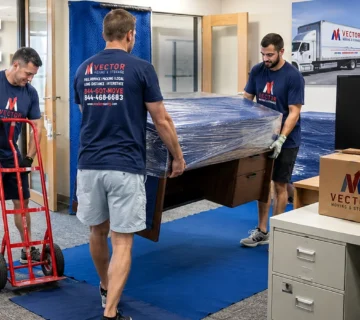
Furniture preparation and loading should follow the inventory and destination plan.
Office Relocation Timeline for San Diego Businesses
Use this San Diego office relocation checklist as a planning framework, then adjust the schedule for office size, lease dates, construction or tenant-improvement work, technology requirements, vendor availability and building restrictions. Start earlier when several departments or vendors must coordinate.
Assign the People Who Can Make Decisions
One authorized move coordinator should maintain the master schedule and approve changes. Larger projects may also need department leads, building contacts and vendor representatives, but the moving company should know who has final authority.
Company Move Coordinator
Approves inventory, timing, priorities, scope changes and destination placement. This person should be reachable throughout the move.
Building Contacts
Confirm loading docks, freight elevators, garage clearance, protection rules, access credentials, approved hours and insurance wording.
IT & Specialty Vendors
Disconnect and reconnect systems, copiers, servers, security equipment or specialized machinery when those tasks require qualified providers.
Department Leads
Approve what moves, what is discarded, employee responsibilities and the room or workstation assigned to each item.
Origin Representative
Completes the final walkthrough, confirms that designated items were loaded and controls access to the old location.
Destination Representative
Opens the site, provides the placement plan, answers room-level questions and documents issues before the crew leaves.

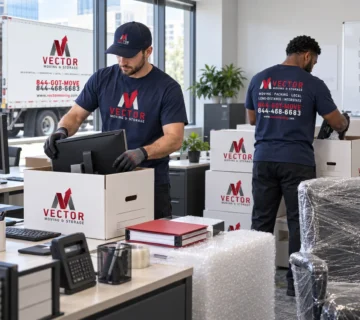
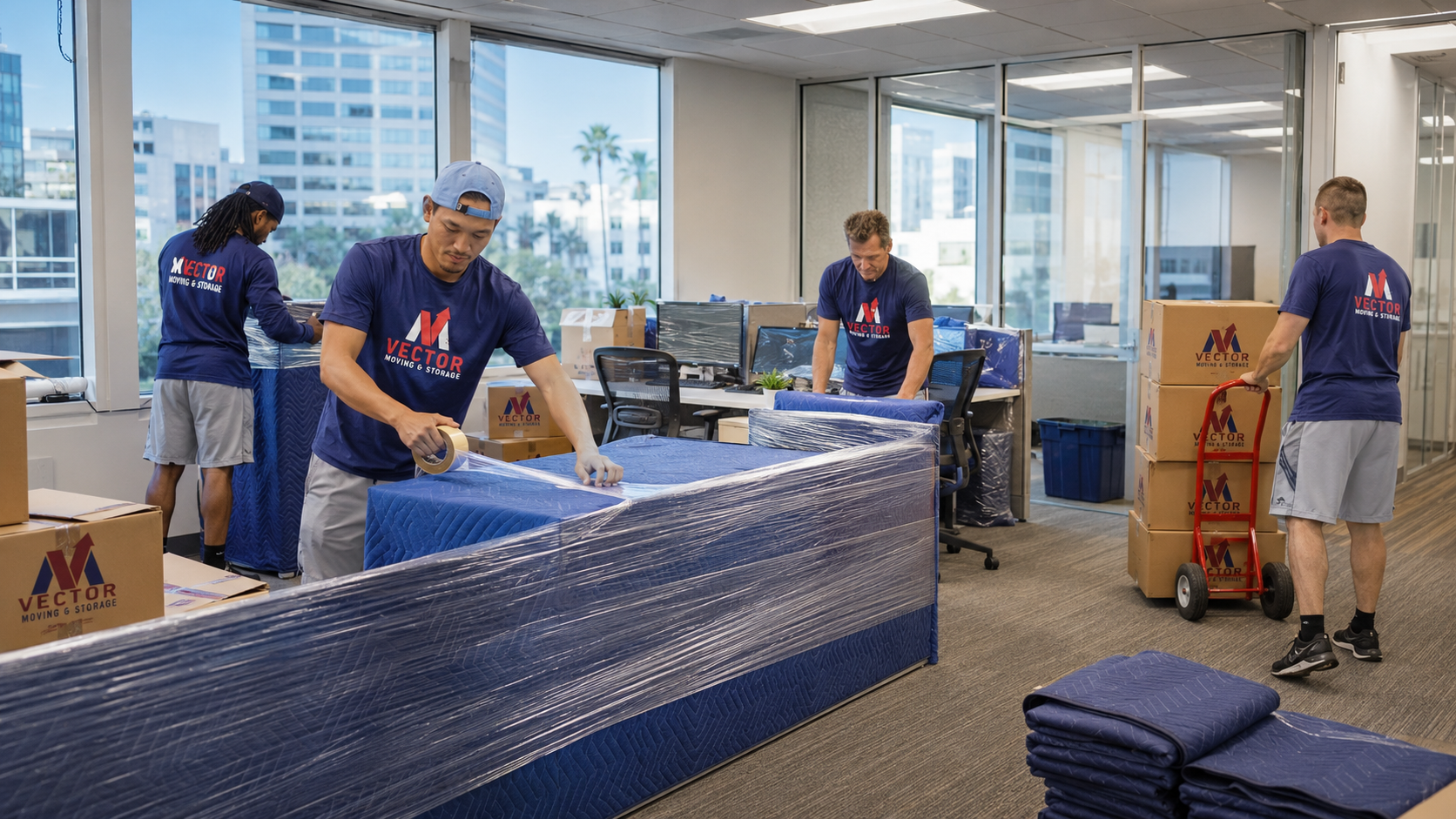
Confirm each building’s protection requirements before the crew arrives.
Confirm Loading, Elevators, Parking and Building Rules
Access problems can affect labor, timing and the equipment required. Ask the property manager at both locations for written move requirements and provide them to the moving company before the estimate is finalized.
- Approved move date and working hours
- Freight-elevator reservation and dimensions
- Loading-dock or curb access
- Garage entrance and height clearance
- Distance from the truck to the suite
- Security desk and access credentials
- Door, floor, elevator and wall protection
- Certificate-of-insurance wording and deadline
- After-hours rules and building contacts
- Restrictions on trash, pallets or staging
Downtown and high-rise moves can require additional coordination. Review Vector’s Downtown San Diego moving guide when either office is in the urban core.
Check San Diego Curb and Traffic-Control Requirements
A building’s permission does not automatically authorize the use of a public street, sidewalk or parking lane. The City of San Diego states that a Traffic Control Permit is required for certain temporary uses of those areas for business purposes and notes that new applications can take about 15 business days to process. Requirements depend on the location and proposed use, so confirm the current rules directly with the City or property manager rather than assuming a moving truck can reserve curb space.
The City’s parking enforcement guidance also explains that commercial-vehicle and alley rules depend on active loading or unloading and posted restrictions. Photograph signs, loading zones, driveway conditions and the proposed truck position when requesting a commercial quote.
Build an Office Inventory and Placement Plan
An inventory is more useful when it identifies what moves, where it goes and whether it needs packing, disassembly or special handling. Separate company property from employee belongings and from items that will be sold, donated, recycled or discarded.
Record the Details That Affect the Move
- Desks, tables, chairs, cabinets and shelving
- Conference-room furniture and wall-mounted items
- Computers, monitors, printers and approved electronics
- Files, supplies, kitchen contents and décor
- Heavy, fragile, oversized or unusually constructed items
- Items going to storage or a separate destination
Provide a destination floor plan with room numbers, department names, workstation identifiers and priority areas. Mark items that must be assembled or placed before others can be delivered.

Disclose furniture dimensions, construction and destination placement during planning.
Separate Moving Work From IT and Data Responsibilities
Movers can transport properly prepared computers, monitors and approved office equipment. Your IT team or qualified vendor should control backups, shutdowns, cable mapping, server procedures, network changes and reconnection. Do not leave these decisions for moving day.
Before Disconnection
Back up critical data, photograph cable connections, label devices and accessories, record serial numbers when required, and decide which systems must remain active longest.
During Transportation
Keep passwords, access tokens, backup media, sensitive portable devices and irreplaceable records under company-controlled custody according to internal policy.
At the New Office
Prioritize internet, phones, essential workstations, printers, access control and customer-facing functions. Test them before the reopening deadline.

Furniture should be prepared according to its construction, finish and route through the building.
Create One Labeling System for the Entire Office
A label should tell the crew where an item goes without exposing confidential information. Use the same room and workstation codes on cartons, furniture and the destination map.
Decide whether employees, your facilities team or professional packers will handle each category. Vector’s San Diego packing services can be coordinated for approved office contents, furniture and selected departments.
Employee Packing Instructions Should Explain
- What employees pack and what movers pack
- Which personal items employees transport themselves
- How drawers, cabinets and shared supplies are handled
- Label format, deadline and destination code
- Where completed cartons are staged
Reduce Downtime With a Phased Reopening Plan
“Move everything quickly” is not a complete continuity plan. Identify the smallest group of systems, people and furniture required to resume essential operations, then organize the move around that priority.
Move Nonessential Areas First
Archives, surplus furniture, secondary conference rooms or storage areas may be moved before core workstations when the buildings and schedule allow.
Keep a Critical-Operations Kit
Retain keys, access cards, vendor contacts, floor plans, essential office supplies and authorized devices with the move coordinator.
Open One Functional Zone
Choose the first reception, operations, sales or customer-service area that must work. Place and test that zone before lower-priority spaces.
If the move occurs outside normal business hours, confirm building access, staffing, lighting, security, noise limitations, elevator availability and any required permits. After-hours scheduling should be agreed in writing rather than assumed.
Use Commercial Storage Only When It Solves a Defined Gap
Storage may help when the new suite is not ready, the old lease ends first, furniture is being reused in phases, or a renovation changes the placement schedule. The inventory should clearly identify which items go to the new office, which go to storage and which do not move.
Ask how pickup, storage, access requests and final delivery will be coordinated. Items required for reopening should not be buried behind low-priority furniture. Review Vector’s San Diego moving and storage options when the move includes a planned holding period.

Planned storage can support phased office transitions and schedule gaps.
What to Provide When Requesting an Office-Moving Estimate
The estimate is more useful when it reflects the real inventory, access and services. Before contacting commercial movers, gather:
- Origin and destination addresses
- Requested date and approved building hours
- Inventory with photographs or a walkthrough
- Floor, elevator, dock and walking-distance details
- Packing and labeling responsibilities
- Disassembly and placement requirements
- Storage, extra stops or phased delivery needs
- Heavy, fragile or unusual equipment
- Insurance-document requirements
- One authorized company contact
San Diego Office Relocation FAQs
How early should a San Diego business plan an office move?
Can office movers disconnect and reconnect computers?
Who should pack employee desks?
Do we need to reserve a freight elevator?
Can Vector move an office after normal business hours?
What should employees transport themselves?
Can office furniture go into storage between leases?
What factors affect the cost of an office move?
Ready to Organize Your San Diego Office Relocation?
Use the completed San Diego office relocation checklist when you contact Vector Moving and Storage. Tell the office about the two properties, inventory, desired date, approved building hours, elevators, loading access, packing, furniture, storage and reopening priorities so the team can help determine which moving services fit the project.
Vector Moving and Storage
Phone: 844-468-6683
San Diego services: Commercial moving, office packing, furniture moving, moving and storage, local and qualifying long-distance relocations.
Published credentials: CAL-T 191802 · CA 530531 · MC 105580 · DOT 3152229