
How to Prepare for a Local Move: A 4-Week Checklist
Learning how to prepare for a local move is less about doing everything at once and more about completing the right tasks in the right order. A nearby move still requires an accurate inventory, a licensed mover, building and parking coordination, careful packing, utility changes, an essentials plan, and a final walkthrough.
This practical guide organizes the work from four weeks before moving day through the first night in your new home. Use the interactive checkboxes, print the page, or follow only the sections that apply to your household.
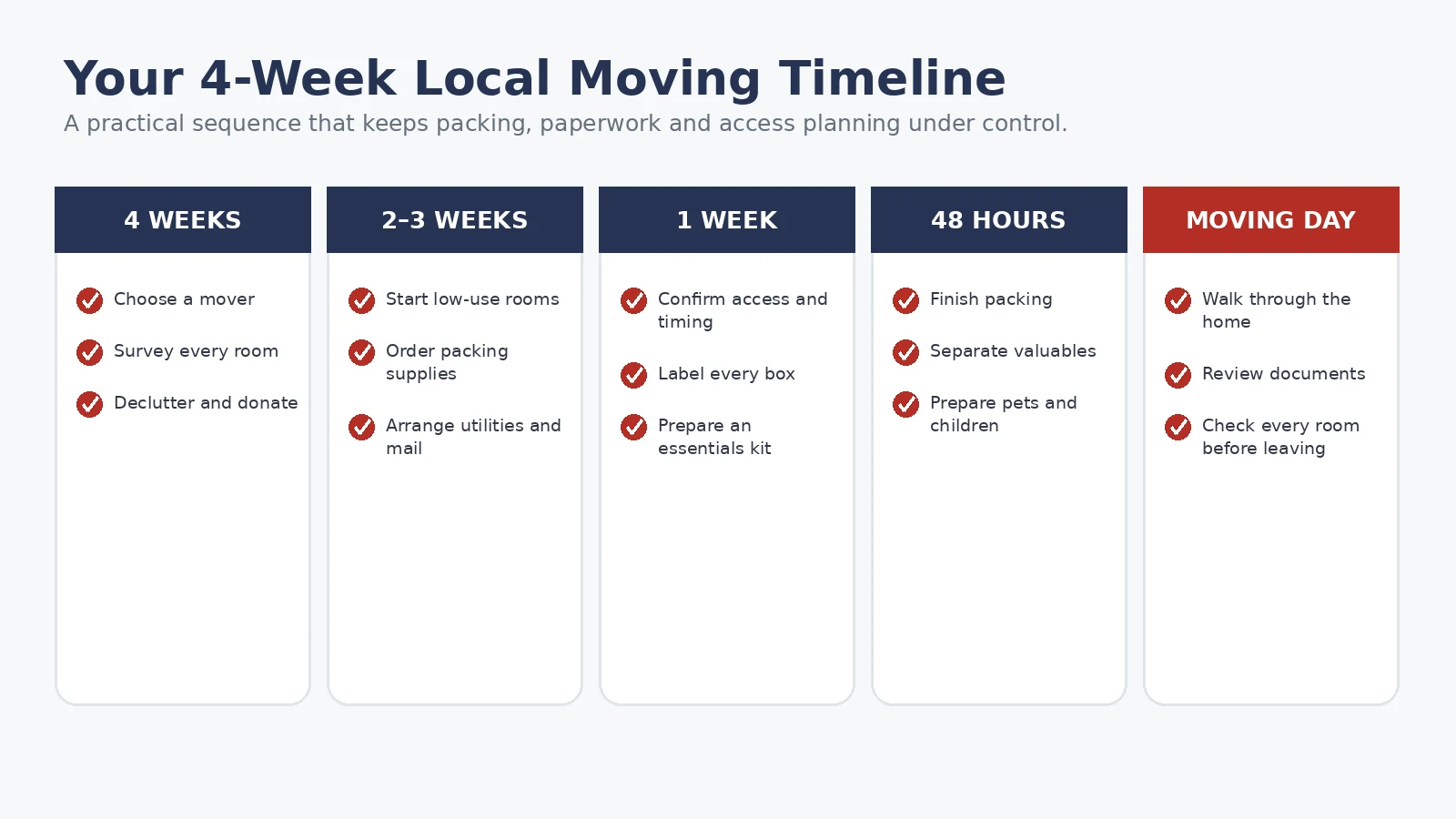
Your Local Moving Timeline at a Glance
Start with decisions that affect the price and schedule. Save daily-use packing and final property checks for the last few days.
Build the Moving Plan Before You Build the Boxes
The first stage is about scope: what is moving, who is handling it, where the truck can go, and which services need to be scheduled.
Choose and Verify the Mover
Survey Both Properties
Declutter Before Packing
Reserve Important Dates
Start Packing the Things You Do Not Use Every Day
Begin with seasonal clothing, books, decorative items, guest rooms, stored kitchenware, and other low-use belongings. Leave medications, daily cookware, work devices, children’s essentials, pet supplies, and important documents accessible.
Pack one room or category at a time. A half-packed room is difficult to inventory and easy to forget. Keep boxes within a reasonable weight, close them completely, and avoid vague labels such as “miscellaneous.”

A Packing-Supplies Checklist for a Local Move
A useful supply plan protects the contents and keeps boxes manageable. Heavy items belong in smaller boxes; lightweight bulky items can use larger cartons.

Label Every Box for the Delivery, Not Just the Pickup
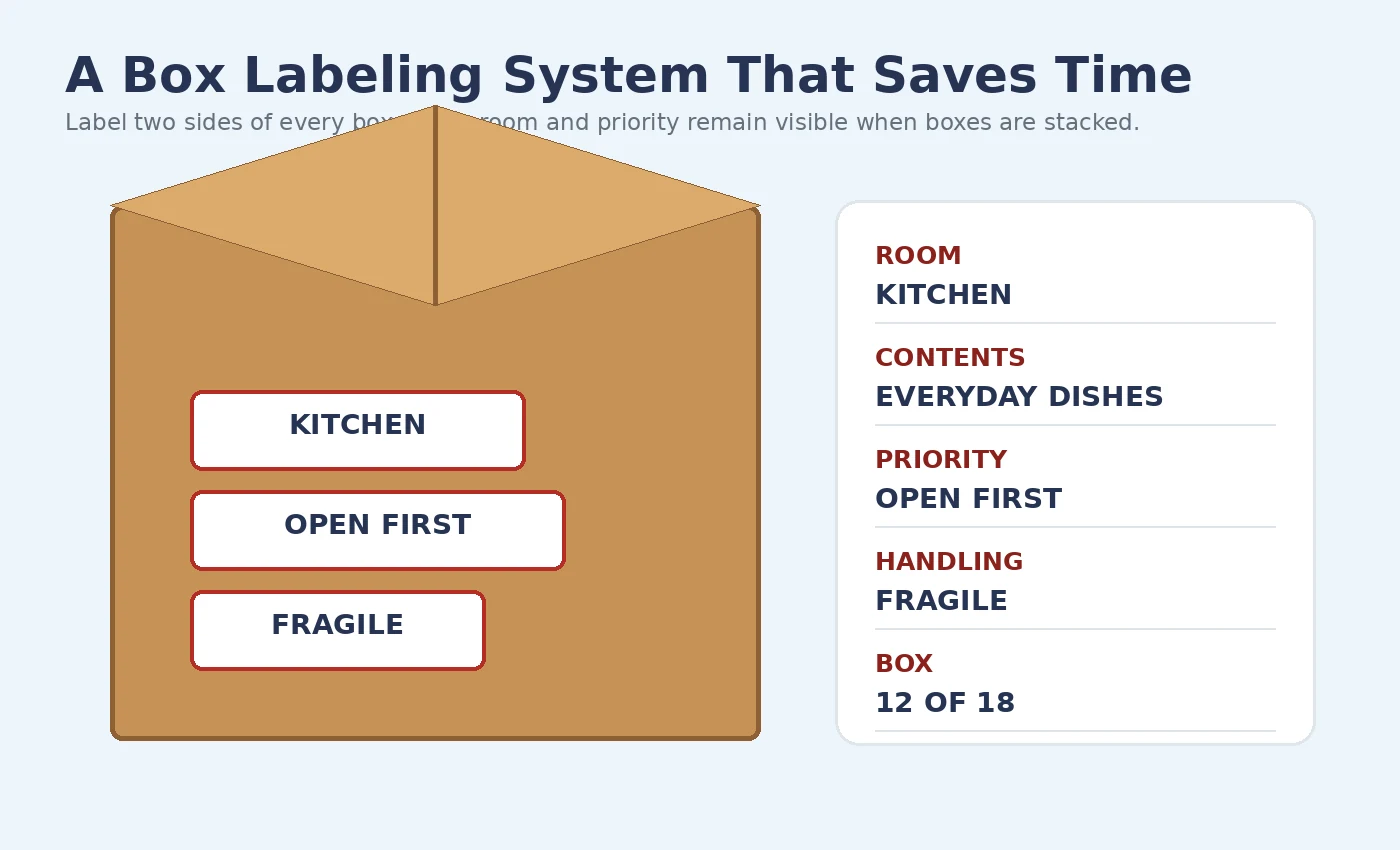
Good labels tell the crew where the box belongs and tell you what to open first. Write the destination room, a useful contents description, priority, fragile handling when appropriate, and a box number when you are keeping an inventory.
Place the label on at least two sides. Labels only on the top disappear when cartons are stacked. A consistent room-number or color system is especially useful for apartment moves, multi-level homes, storage, and deliveries to several locations.
Decide What Needs Disassembly, Wrapping or Special Review
Do not automatically disassemble every piece of furniture. Some items move more safely when prepared by the crew, while others require manufacturer instructions or a specialty provider. Tell the moving company about safes, pianos, stone furniture, oversized glass, artwork, adjustable beds, exercise equipment, antiques and items with existing damage.
Also review the carrying route. Doorways, stair railings, floors, wall corners, elevators and common hallways may need protection based on the building rules and the actual move.

Prepare an Essentials Kit and Separate What Travels With You
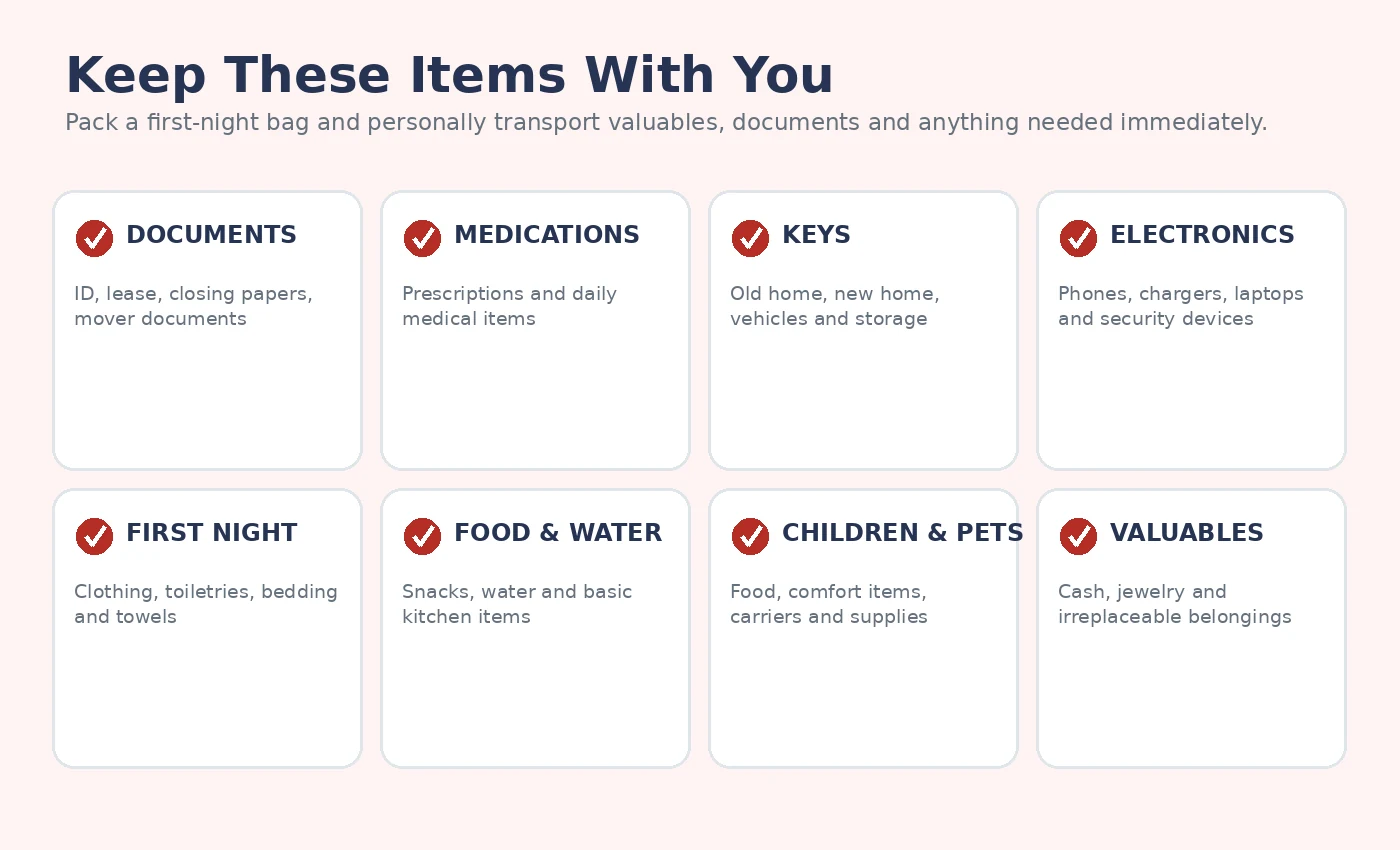
The moving truck should not contain the items you need to identify yourself, access the property, manage medications or function during the first night.
Finish the Home
Confirm the Logistics
Keep the Property Clear and the Decisions Simple
One authorized adult should be available at pickup and delivery. Show the crew the items requiring special attention, identify everything that should not be loaded, and answer destination questions through one person rather than several conflicting voices.
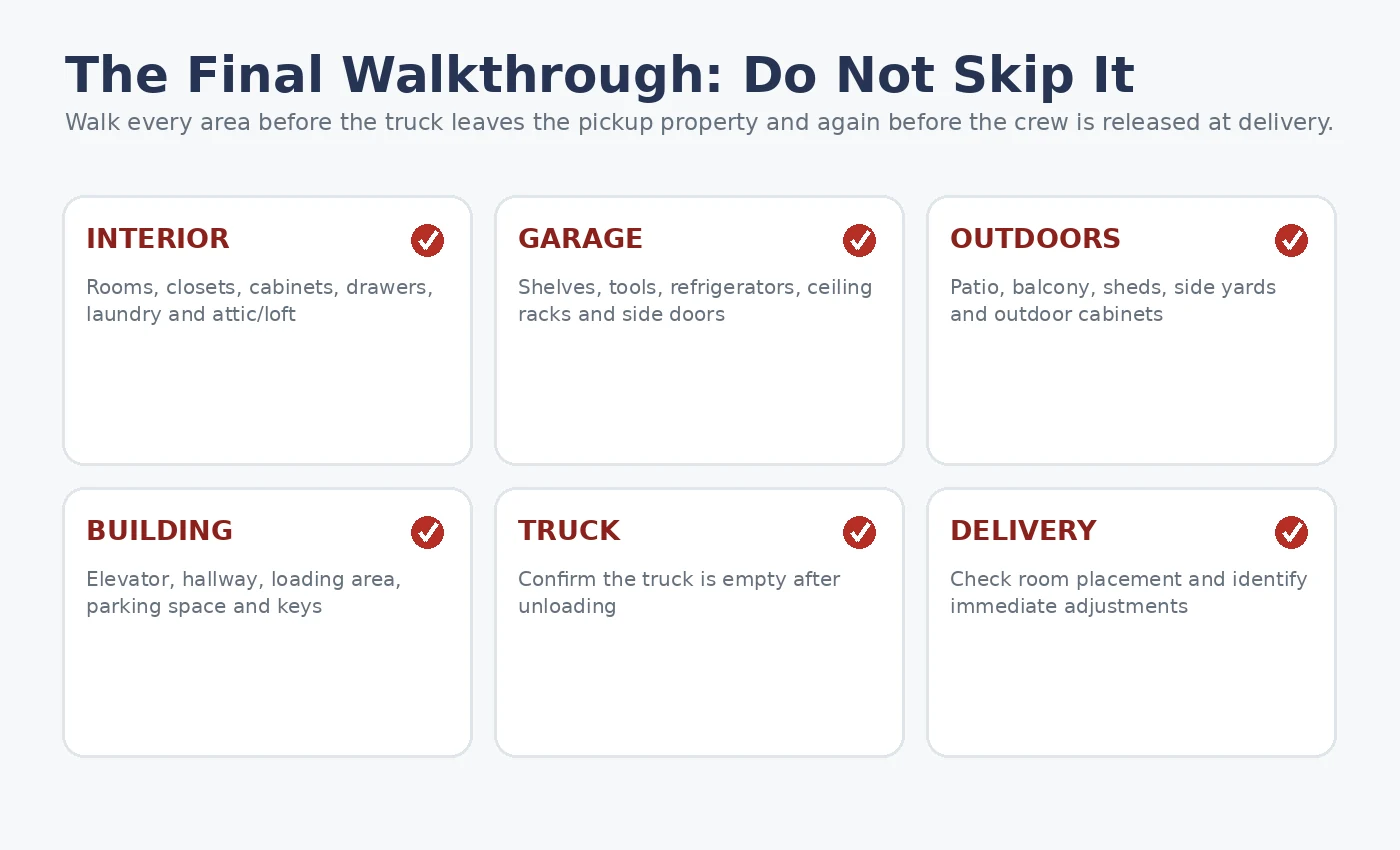
Use a Final Walkthrough Checklist
A signed completion document should follow a real inspection of the old property, truck and delivery areas—not a quick glance at the main rooms.
Keep Valuables With You and Discuss Restricted Items
Carry Personally
Cash, jewelry, passports, identification, medications, keys, financial records, security devices and irreplaceable documents.
Do Not Pack as Ordinary Household Goods
Fuel, propane, fireworks, ammunition, open chemicals, paint, corrosives and other hazardous or restricted materials.
Discuss in Advance
Plants, alcohol, perishable food, firearms, lithium batteries, large aquariums, medical equipment and unusually valuable collections.
Verify the Mover and Review the Written Documents
Before a California Household Move
California’s Bureau of Household Goods and Services advises consumers to verify that the mover is authorized, research the company, use a written estimate after the goods are inspected, photograph or video belongings, and keep copies of everything signed.
Frequently Asked Questions About Preparing for a Local Move
When should I start preparing for a local move?
What should I pack first?
Should I empty dresser drawers?
How should I label moving boxes?
What should stay with me on moving day?
Do I need to reserve parking or an elevator?
Should I disassemble furniture myself?
Can movers help with only part of the packing?
What if my new home is not ready?
Turn the Checklist Into a Moving Plan
Vector Moving and Storage can help with local moving, full or partial packing, furniture preparation, warehouse storage and final delivery. Tell us about the inventory, addresses, date, access and services you need.